14 August 2026
Ride Cymbal Sizes: What Drummers Need to Know

Ride Cymbal Sizes: What Drummers Need to Know
The most common ride cymbal sizes are 20" and 22", and the right pick between them comes down to volume, musical style, and how much stick articulation versus wash you need out of the cymbal. Ride cymbal sizes generally run from 18" to 24", with a handful of specialty models pushing past either end of that range.
Here’s the short version, broken down by what most drummers actually need:
- 20" for versatility and control, especially at moderate volumes across genres.
- 22" for fuller wash, more low end, and projection in louder or fuller-mix settings.
- 18" for tight stick articulation, jazz combos, or a lighter modern specialty feel.
- 24" for maximum projection on large stages or in orchestral and big-band contexts.
Three things drive that decision every time: the music you’re playing, the room or mix you’re playing in, and whether your technique leans on a clean ping or a wide wash.
Key Takeaways
The right ride cymbal size comes down to three fast rules: 20" for versatility, 22" for fuller projection and complex wash, and 18" for tight articulation in quieter or specialty settings.
| Point | Details |
|---|---|
| 20" is the versatility pick | Balances control and projection across jazz, studio, and moderate-volume rock or pop settings. |
| 22" adds projection and wash | Best when you need more low end and complexity to cut through a fuller live mix. |
| 18" suits tight articulation | Favored in jazz combos and studio work where wash needs to stay controlled. |
| 24" fills large spaces | Reserved for orchestral, big-band, or large-stage settings needing maximum sustain. |
| Weight and alloy refine the choice | A B20 ride adds warmth and complexity that diameter alone can’t deliver. |
| Templeofsound stocks the full range | Handcrafted B20 rides from 18" to 24" are available to audition through Temple of Sound. |
Table of Contents
- Ride Cymbal Sizes and Their Sonic Snapshots
- Why Does Ride Size Change the Sound So Much?
- Which Ride Size Fits Your Musical Style?
- Is a 20" Crash Too Big, and Can a Ride Double as a Crash?
- What Does B20 Mean, and How Does Alloy Shape the Sound?
- A Short Checklist Before You Buy a Ride
- Real Kit-Matching Examples Worth Trying First
- An Honest Take on Choosing Ride Size
- Where to Audition and Buy a Handcrafted B20 Ride
- Frequently Asked Questions
- Sources
Ride Cymbal Sizes and Their Sonic Snapshots
Diameter alone won’t tell you everything about a ride, but it’s the fastest predictor of pitch, decay, and how the cymbal behaves under a stick. Smaller diameters generally produce a higher pitch and quicker response, while larger ones drop the pitch and stretch out the sustain and projection. Here’s how that plays out across the common range.
| Diameter | Typical Pitch | Sustain / Wash | Stick Articulation | Projection Notes |
|---|---|---|---|---|
| 18" | High | Short, controlled | Sharp, defined ping | Best for close-mic’d or intimate settings |
| 20" | Medium-high | Moderate, balanced wash | Strong articulation with some body | Handles most stages and studio work |
| — | Medium | Slightly fuller than 20" | Good clarity, a touch more wash | Uncommon but a middle-ground option |
| 22" | Medium-low | Fuller, more complex wash | Still articulate, warmer overall | Cuts through denser live mixes |
| — | Low-medium | Rich, spreading wash | Softer attack, more blur | Rare, mostly boutique or custom builds |
| 24" | Low | Long, washy sustain | Attack softens under wash | Big-stage, orchestral, large-ensemble use |
Modern kits gravitate toward 20" and 22" for good reason. Between them, they cover the bulk of jazz, rock, pop, fusion, and studio needs, which is why manufacturer resources consistently list them as the standard range. Specialty sizes exist at both ends. Flat rides and some jazz nuance models run smaller and thinner specifically to shorten sustain and keep the cymbal from overwhelming a quiet combo, while a few experimental or orchestral builds push past 24" for sheer volume and low-end weight. Those edge cases prove the point rather than break it: diameter shapes decay and wash, but weight and profile shape it further.
Why Does Ride Size Change the Sound So Much?
Diameter primarily governs pitch and wash: larger cymbals lower the pitch and lengthen sustain, while smaller ones raise the pitch and shorten decay. That’s the baseline rule, but it only tells half the story. The same 22" diameter can sound like two entirely different cymbals depending on how thin or heavy it’s hammered, how high or low the profile sits, and how large the bell is cut.
A thin cymbal flexes more freely when struck, which speeds up the wash and lowers the volume ceiling before it starts to choke. A heavy cymbal of the identical diameter resists that flex, holds a cleaner stick sound longer, and pushes more air, so it reads louder and more controlled at once. Profile does something similar: a low profile spreads overtones out into a wash faster, while a high profile concentrates energy near the bell and keeps the ping tighter.
Three real-world pairings show how this plays out:
- A 22" medium-thin ride opens up into a wash faster and crashes more easily than a 22" medium-heavy, which holds a cleaner stick pattern at higher volumes.
- A 20" thin jazz ride breathes and blooms with light touch, while a 20" heavy rock ride stays tight and cutting even when driven hard.
- A cymbal with a small, low bell gives a softer, blended ping, while the same diameter with a larger, higher bell delivers a sharper, more cutting bell tone for rock and fusion patterns.
Pro Tip: When you audition a ride, play the same pattern on two cymbals of the same diameter but different weights, back to back, at the volume you’d actually use on a gig. The diameter tells you the ballpark; the weight and profile tell you whether it fits your hands and your band.
Which Ride Size Fits Your Musical Style?
Match the size to the genre and setting first, then fine-tune with weight and alloy. That single move eliminates most of the guesswork drummers run into at the cymbal wall.
Jazz combos and small acoustic ensembles usually do best with an 18" to 20" ride, since a thinner, smaller cymbal keeps stick definition crisp and doesn’t wash over a quiet upright bass or a whispering brush pattern. Studio work for pop, singer-songwriter, or small-band tracking often leans the same direction, favoring 20" for its control under close mics, where smaller rides deliver brighter tones and cleaner stick definition. Jazz drummers in particular tend to favor thinner, smaller rides in intimate rooms specifically to keep wash and volume in check without sacrificing the ping that carries the ride pattern.
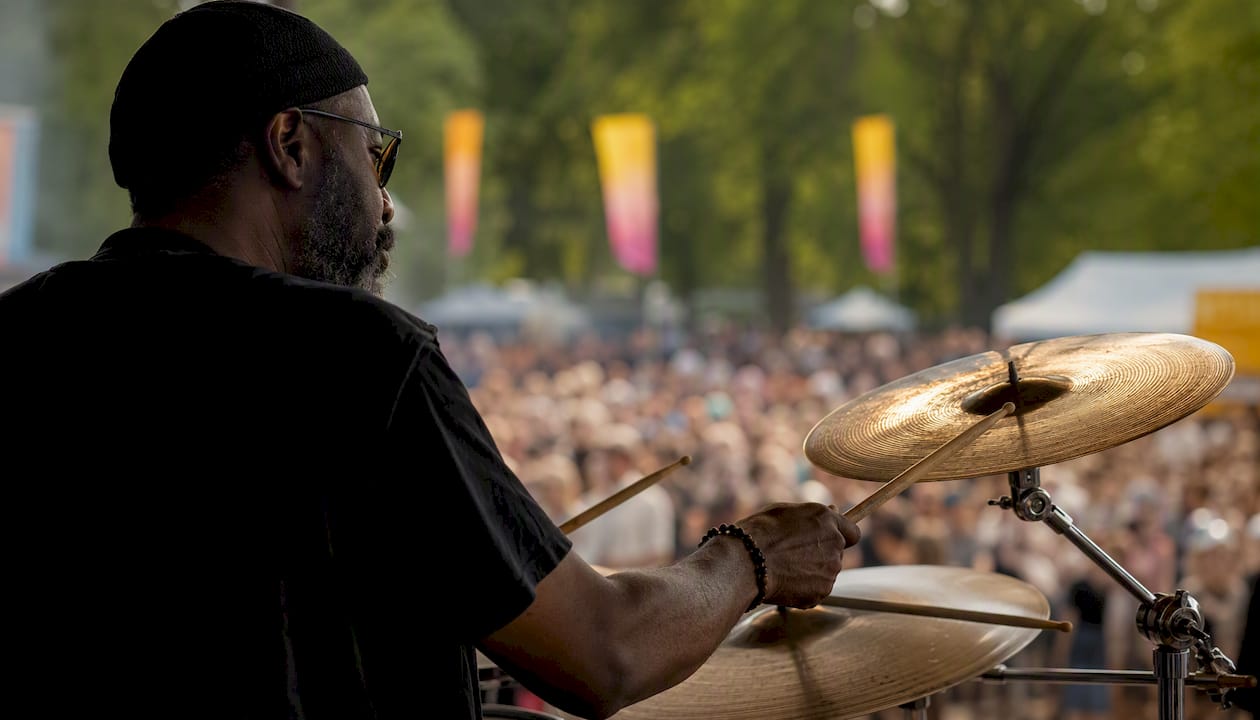
Pop, rock, and fusion bands with a fuller mix generally push toward 20" to 22", where the extra diameter provides enough low end and projection to sit above electric guitars and a driving bass line without disappearing. Metal and louder rock settings often move to 22", sometimes paired with a heavier weight, since larger rides project further and cut through a dense, high-volume mix. Orchestral and large-ensemble contexts are where 24" earns its keep, delivering the sustained wash and low-frequency weight needed to fill a concert hall or a large stage without a monitor system doing the heavy lifting.
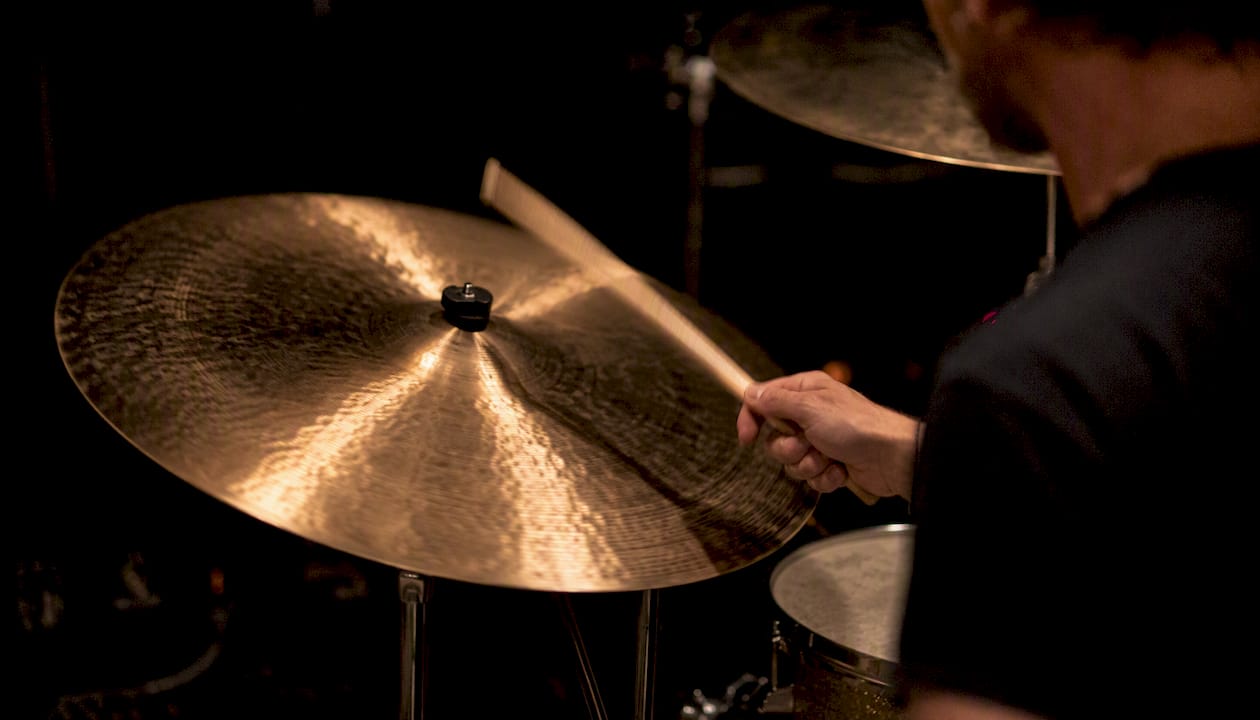
Amplified mixes change the math slightly. When you’re relying on stage volume and a house PA to cut through, favor a larger ride for projection. When you’re mixing acoustically or tracking close-mic’d in a studio, a smaller ride gives you more control and less bleed into other channels, a distinction worth keeping in mind if you’re mixing on a tight budget and can’t rely on heavy post-production EQ to tame an overpowering wash.
Is a 20" Crash Too Big, and Can a Ride Double as a Crash?
Yes, some larger crashes can double as rides, but the tradeoff is a slower attack and a longer decay than a purpose-built ride offers. Standard crash cymbals typically run between 14" and 20", so a 20" crash sits right at the ceiling of that range, which is exactly why it starts behaving like a hybrid rather than a pure crash.
A crash that size tends to speak more slowly than a 16" or 18" crash, and once it opens up, it takes longer to decay, which can muddy fast crash accents if you’re not careful. That’s not necessarily a flaw. It’s a design tradeoff that some drummers use on purpose.
Two hybrid uses show up often in real setups:
- A 20" crash used as an explosive ride pattern cymbal, where the extra decay adds drama to accented hits without needing a dedicated large ride.
- A 22" crash/ride hybrid, built with a bit more weight than a standard crash, that handles ride patterns at moderate volume while still crashing convincingly when hit harder.
Before you buy a large crash expecting ride duty, run a quick audition checklist:
- How fast does it speak when struck at gig volume, not just in a quiet shop?
- How long does the decay ring out, and does that length work with your tempo and genre?
- Can you still control dynamics on it, or does it wash out the moment you push past a moderate stick attack?
What Does B20 Mean, and How Does Alloy Shape the Sound?
B20 refers to a bronze alloy made of roughly 80% copper and 20% tin, and it’s the material behind most handcrafted professional rides. That copper-to-tin ratio matters because it’s what gives B20 cymbals their characteristic warmth, harmonic complexity, and responsiveness under a stick, compared to cheaper alloy blends.
In practice, a B20 ride tends to bloom more richly when struck, with overtones that layer instead of collapsing into a flat, one-dimensional tone. That complexity is part of why B20 shows up so often in rides built for jazz, fusion, and any style where a musical, washy stick sound matters more than raw volume. As a rule of thumb, if you want a ride with more shimmer and harmonic depth at a given diameter, B20 construction is usually the deciding factor over diameter alone.
Alternatives like B8 or B10 bronze, and various proprietary alloy blends, tend to produce a brighter, more one-note sound with less complexity. They’re not inferior, just different tools. A B8 ride can sound sharp and cutting in a way that works for certain rock or pop applications, but it rarely delivers the layered wash that makes a B20 ride feel alive under a jazz brush pattern or a fusion groove.
A Short Checklist Before You Buy a Ride
Ask yourself five questions before you commit to a size: what genre you’re playing, what venue or volume you’re playing at, whether you need pocket control or wash, how dynamic your playing style is, and whether size and weight fit your gig bag and hardware.
Run through this audition sequence the next time you’re in a shop or testing a cymbal at a demo:
- Play a basic ride pattern at your typical performance volume, not a quiet tap in a padded room.
- Strike the bell directly and listen for clarity, since bell size and profile affect ping regardless of diameter.
- Accent a few beats harder to check how the wash builds and whether it stays controlled or spirals into a wall of noise.
- Try a crash hit on the edge to see how the cymbal behaves outside pure ride duty.
- Compare it back to back with one size up and one size down to confirm the diameter, not just the model, is doing what you want.
Watch for a few common mistakes along the way. Picking a size because it looks impressive on stage, without checking how it actually plays at your volume, is the most frequent regret drummers report. Ignoring bell response is another, since a weak or muddy bell undercuts your timekeeping no matter how good the wash sounds. And overlooking total weight matters more than people expect, both for tone and for how tired your arm gets three sets into a long gig.
Pro Tip: Bring a bandmate or a second pair of ears to any serious ride audition. What sounds articulate to you six inches above the cymbal often reads completely differently from where your drummer or the audience actually hears it.
Real Kit-Matching Examples Worth Trying First
Matching a ride to your kit gets easier once you look at how it plays out in real setups rather than abstract size charts. A four-piece jazz kit paired with an 18" or 20" thin ride keeps the pattern articulate and out of the way of a quiet upright bass, which is exactly why so many working jazz drummers default to that combination in small rooms.
A five-piece rock kit generally does better with a 20" or 22" ride, depending on how loud the guitars run and whether you need more low-end projection to cut through a dense mix. And a large-sounding acoustic or orchestral setup, where sustain and hall-filling wash matter more than tight articulation, tends to reach for a 24" ride to fill the space the way a smaller cymbal simply can’t.
Auditioning handcrafted B20 rides in person changes these decisions more often than spec sheets suggest, since two 22" cymbals from different batches can behave noticeably differently depending on hammering and finishing. Temple of Sound, as the UK’s exclusive distributor for Alchemist Cymbals, stocks handcrafted B20 rides across that common 18" to 24" range, which makes it a practical starting point for comparing weight and profile within a single diameter before committing. If you’re building out a jazz kit, start with the smallest B20 option in stock. If you’re chasing projection for a rock or fusion setup, start at 22" and work outward from there.
An Honest Take on Choosing Ride Size
A ride’s size should serve the music you’re actually playing, not the size that looks most impressive in a case or matches whatever a favorite player uses on stage. That’s the mistake I see most often: drummers buying up in diameter because bigger feels like more value, when a smaller, better-matched cymbal would have solved their actual problem.
My advice is simple. Audition at real performance volume, not a quiet shop corner, and pay as much attention to bell clarity and stick articulation as you do to the overall wash. Size gets you in the right neighborhood, but weight, profile, and alloy decide whether a cymbal actually fits your hands and your band.
Where to Audition and Buy a Handcrafted B20 Ride
Temple of Sound carries a range of handcrafted B20 rides and can walk you through matching a size to your kit before you commit to a purchase.

As the UK’s exclusive distributor for Alchemist Cymbals, Temple of Sound gives you access to handcrafted B20 rides across the full 18" to 24" range, along with kit-matching guidance drawn from real playing contexts rather than a spec sheet alone. Trade accounts are available for retailers looking to stock a curated range, and the custom stick builder lets you pair the right stick weight to whatever ride you land on. Bring a drummer friend along when you audition, or test in a monitored room if you’re shopping remotely, since a ride sounds different six inches from your ear than it does across a stage. Check current inventory on the Temple of Sound store and start narrowing your options by diameter and weight today.
Frequently Asked Questions
What is the most common ride cymbal size? 20" and 22" are the most widely used ride cymbal sizes, covering the majority of jazz, rock, pop, and studio applications.
What is the standard size range for ride cymbals? Ride cymbal sizes typically run from 18" to 24", with rare specialty models extending slightly beyond either end.
Is a bigger ride cymbal always louder? Generally yes, larger diameters project more and carry a fuller wash, but weight and alloy influence perceived volume just as much as size does.
Can I use a large crash cymbal as a ride? Yes, some crashes around 20" can function as a ride, though they typically speak more slowly and decay longer than a dedicated ride cymbal.
What does B20 mean on a cymbal?
Sources
- Types of cymbals: a complete guide for every drummer — Drum Beats Online
- What you need to know about cymbal alloys — Modern Drummer
- What size ride cymbal should I get? — Attuned Musician
- Cymbals 101 — SABIAN