25 August 2026
Oak vs Hickory Drumsticks: Which Wood Fits Your Playing?
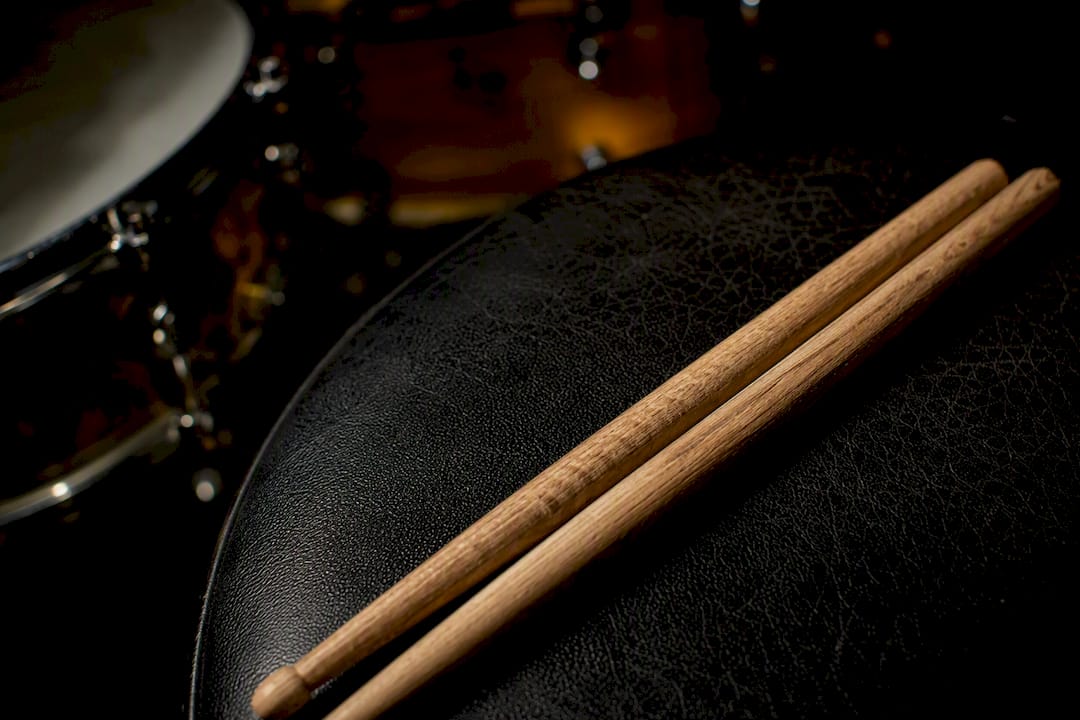
Oak vs Hickory Drumsticks: Which Wood Fits Your Playing?
Oak is heavier and louder with a longer lifespan; hickory is the industry-standard middle ground offering better rebound and less vibration. Drum Beats Online and Modern Drummer both frame the choice the same way: pick oak if you want volume and durability at the cost of feel, and pick hickory if you want comfort and control at the cost of some longevity. Temple of Sound stocks both because neither wood wins for every player.
TL;DR:
- Oak sticks last longer and withstand rimshots better but transfer more force and vibration, making them feel harsher and requiring more effort to play.
- Hickory sticks are lighter, more flexible, and provide better rebound, reducing fatigue over long sessions but wear gradually and warn before breaking.
- Oak is denser, heavier, and more resource-intensive to produce, but its longer lifespan can reduce overall environmental impact despite a slightly larger resource footprint.
- Drummers should choose oak for loud, heavy playing or quick stick breakage, and hickory for versatile, long sessions or when control and comfort are priorities.
- Both woods are sustainably sourced domestic hardwoods, with oak taking longer to harvest and dry, and hickory offering a more predictable, gradual wear pattern.
Table of Contents
- Oak vs Hickory Sticks: A Quick Comparison
- What Makes Oak and Hickory Behave Differently?
- How Oak and Hickory Feel Behind the Kit
- How Long Do Oak and Hickory Sticks Actually Last?
- Which Wood Fits Your Playing Style?
- How to Tell Oak Sticks From Hickory Sticks
- What Temple of Sound Recommends for New Buyers
- How Drummers’ Wood Preferences Have Shifted Over Time
- Is Oak or Hickory the More Sustainable Choice?
- Notes From the Road: What Customer Feedback Taught Us
- Where to Buy Oak and Hickory Drumsticks
- Sources
Oak vs Hickory Sticks: A Quick Comparison
Before you dig into the material science, here’s how the two woods stack up on the traits that actually matter behind the kit.
Oak drumsticks:
- Heavier per pair, which adds momentum to every stroke and pushes more volume out of cymbals and drum heads.
- Tends to survive rim contact and cross-sticking far longer than hickory before showing damage.
- When oak does fail, it usually snaps clean rather than fraying, often with little warning.
- Common fit: touring rock and metal drummers who play loud, heavy sets night after night.
Hickory drumsticks:
- Lighter and more flexible, so it absorbs shock at the wrist and shoulder instead of passing it straight to your joints.
- Wears gradually at the tip and shoulder, giving you visual warning before a stick actually breaks.
- The industry-standard pick for most working drummers, from function bands to studio sessions.
- Common fit: players who log long hours, care about hand fatigue, or need consistent rebound across a whole set.
When to pick oak: you’re breaking sticks weekly and need something that survives heavy rimshots and loud rides.
When to pick hickory: you play multiple genres, log long sets, or simply want a stick that feels the same in your hand for months.
What Makes Oak and Hickory Behave Differently?
Wood density is the root cause of nearly every difference drummers notice between these two materials. White oak weighs around 47 pounds per cubic foot at 12% moisture, placing it among the denser, stronger hardwoods used in furniture and flooring, let alone drumsticks. That extra mass is exactly why an oak 5A feels noticeably heftier than a hickory stick cut to the same dimensions.
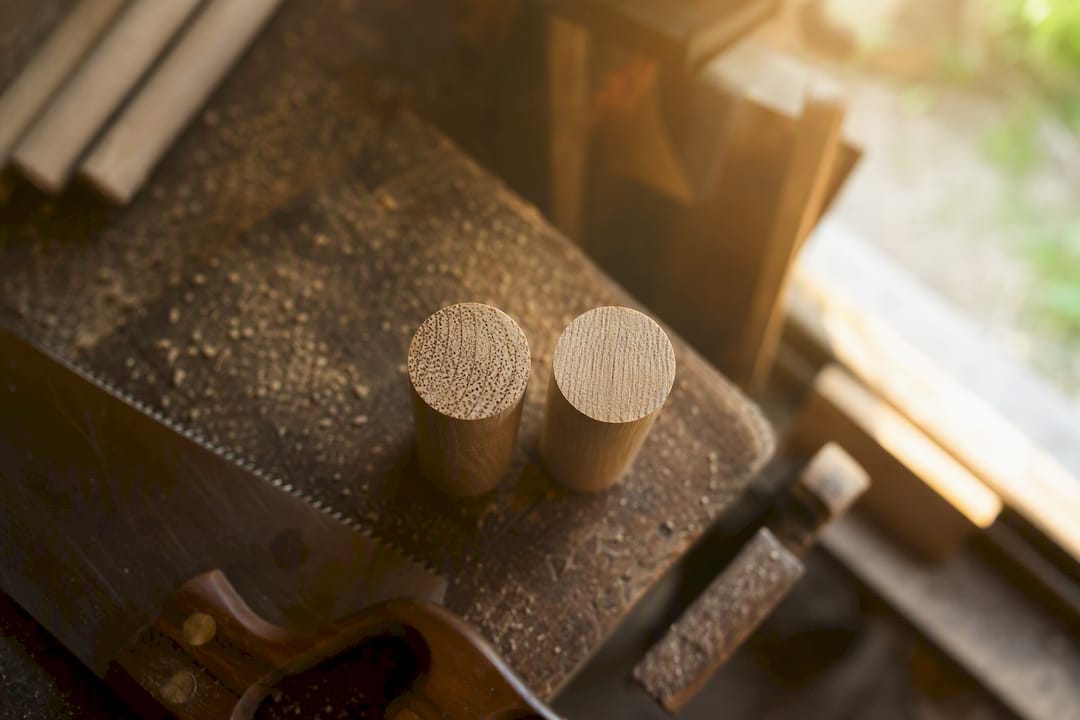
Hickory earned its position as the default drumstick wood because it balances weight, flex, and toughness well compared to many other domestic hardwoods. Drum Beats Online notes it balances those three traits well enough that most manufacturers default to it, and most players never think to question the choice. That flex matters more than it sounds: when a stick bends slightly on impact, it’s dissipating energy that would otherwise travel straight into your hand.
Oak doesn’t bend the same way. Its higher density and stiffness mean less of the impact energy gets absorbed by the stick, transferring more force forward and some vibration back into the hand. That’s the physical reason oak feels “harsher” to a lot of players, and it’s also why oak carries more punch into a drum head or cymbal.
Grain structure adds another layer. Oak’s wood anatomy includes large rays and tyloses, tiny cellular structures unique to white oak that clog the wood’s pores. Quarter-sawn oak shows this off as visible ray fleck, a shimmering fleck pattern you won’t see on hickory. Drying oak also takes longer and demands more care than drying hickory, which is part of why oak sticks often cost a bit more and are harder to find in the exact size you want.
How Oak and Hickory Feel Behind the Kit
Attack is where the wood difference shows up first. Oak drives into a snare or tom with more initial punch due to its greater mass, translating into a harder attack on drum heads. Hickory’s attack is rounder, with a touch more give right at the point of contact.
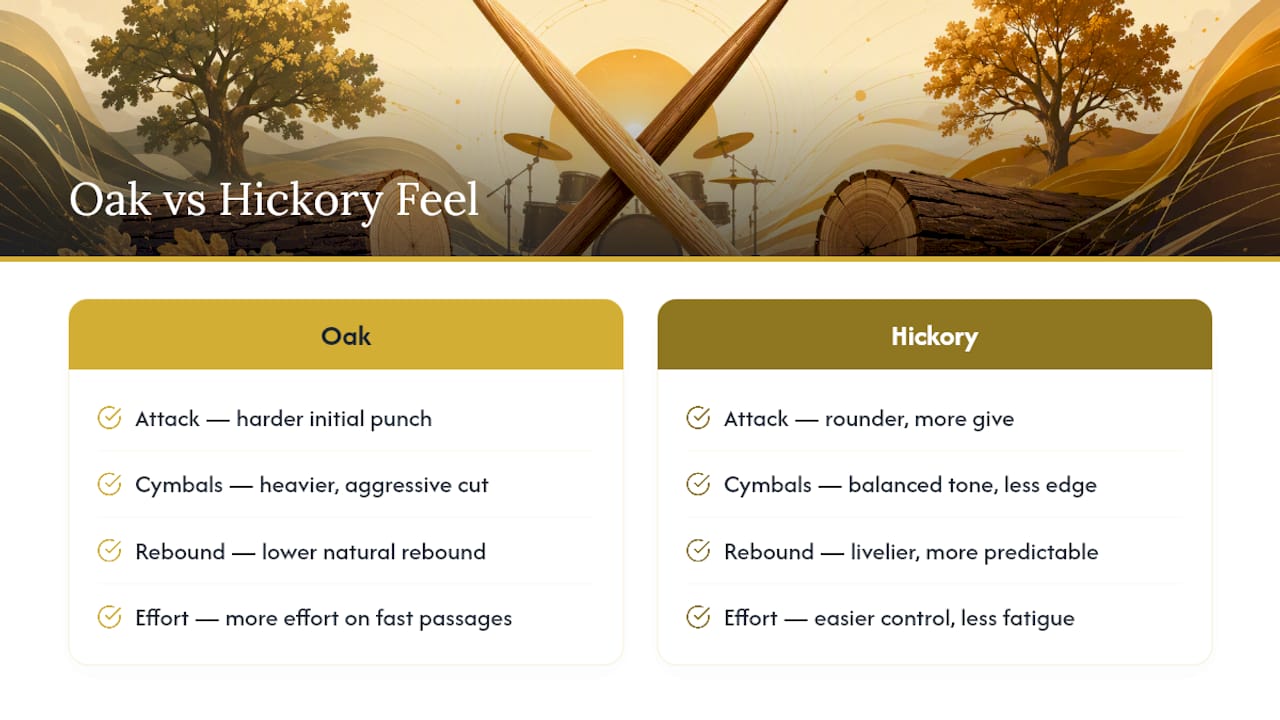
Cymbal work is where the gap widens. Oak tends to produce a heavier, more aggressive cymbal sound that cuts through a loud mix, according to Drum Intel, while hickory delivers a more balanced tone with less edge. If you play a band where the guitarist refuses to turn down, that extra cut from oak on your ride can be the difference between being heard and getting buried.
Rebound is the trait most players notice within the first thirty seconds of picking up a new pair. Hickory’s flex provides a livelier, more predictable bounce off the head, aiding control for fast rolls and ghost notes. Oak’s stiffer profile means less natural rebound, requiring more effort on faster passages, which can cause fatigue over long sets.
None of this happens in isolation from stick size and taper. A thick 2B in oak is a very different tool than a slim 7A in hickory, and Drum Beats Online points out that wood, taper, and tip shape need to be chosen together. Players moving from hickory to oak often size down slightly, dropping from a 5B to something closer to a 5A taper, to offset the added weight and keep rebound manageable.
How Long Do Oak and Hickory Sticks Actually Last?
Oak and hickory don’t just wear differently, they fail differently, and knowing the pattern for each can save you from a broken stick mid song.
Oak tends to resist abuse for a long period and then fail suddenly, often snapping clean across the shaft with little warning after extended heavy use. Player forums describe this pattern consistently: oak lasts a long time, then goes all at once.
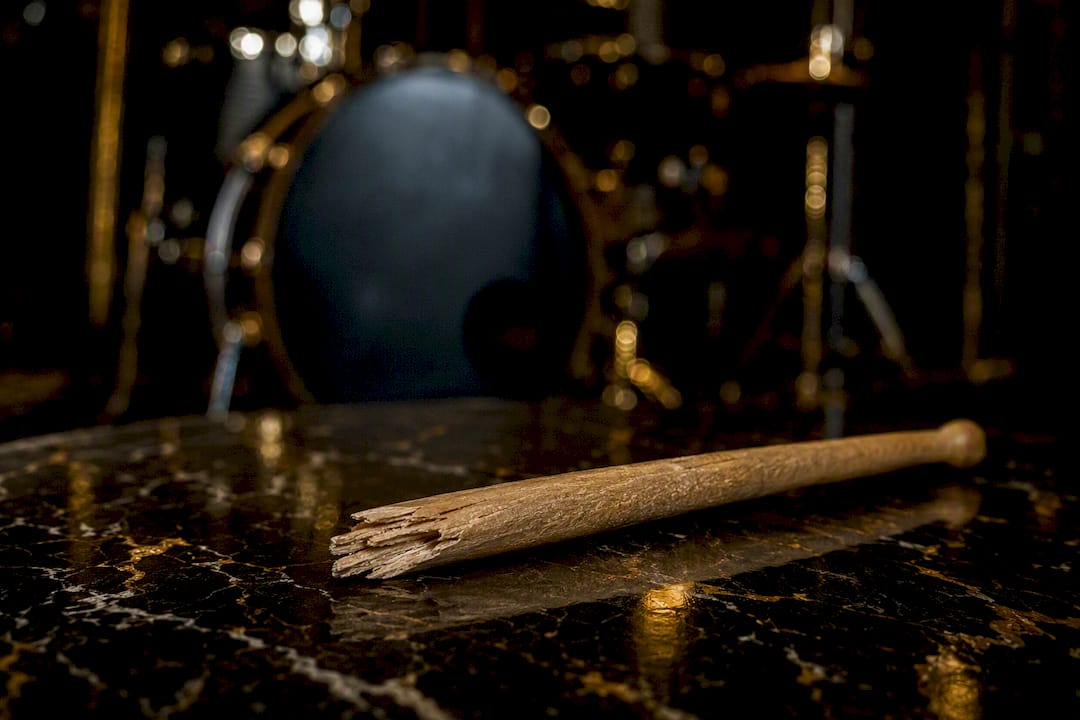
Hickory wears gradually. Tips fray, shoulders chip, and shafts dent before breaking, giving visible signs of wear. That gradual wear is arguably safer for gigging drummers, since a fraying tip is an obvious cue to grab a backup pair before the song ends badly.
A few things accelerate failure in either wood:
- Poor grain alignment. Sticks cut with grain running diagonally instead of straight down the shaft break far sooner, regardless of wood.
- Repeated rimshots on the same spot. Concentrated stress in one place weakens the shaft faster than distributed impact.
- Sharp cymbal edges. A ride or crash with a rough edge shaves stick material with every hit, wearing down tips faster than normal head contact.
Pro Tip: Rotate between two pairs during long rehearsals or multi-set gigs, and run your thumb along the shaft every time you set them down. A rough patch, hairline crack, or soft spot is your cue to retire that stick before it lets go on you mid fill.
Which Wood Fits Your Playing Style?
Genre and setting decide this question more reliably than personal preference alone. Here’s how to think through it:
- Heavy gigging rock or metal. Start with oak in a 5B or 2B profile. You’re playing loud, hitting hard, and breaking sticks regularly, so the extra projection and lifespan pay for themselves fast. Oak also cuts through distorted guitars and a loud PA better than a lighter wood.
- Studio and session work. Start with hickory in a 5A. Sessions demand consistency across takes, low fatigue over long days, and a stick that won’t overpower a close mic’d kit. Hickory’s predictable rebound also makes it easier to nail the same dynamic twice.
- Jazz and light acoustic settings. Start with hickory in a 7A or similar lighter taper. You need touch and control far more than volume, and hickory’s flex lets you play soft passages without fighting the stick.
Plenty of drummers split the difference by keeping one pair of each on hand, hickory for most of the set and oak for the loudest song or the encore where projection matters most. There’s no rule that says your whole set has to run on one wood.
How to Tell Oak Sticks From Hickory Sticks
Manufacturers don’t always label wood type clearly, and a worn finish can make identification tricky. A few checks settle it quickly.
- Grain and color. Oak shows a coarser, more open grain pattern, and quarter-sawn oak often reveals a distinctive ray fleck across the surface that hickory never shows. Hickory’s grain runs finer and straighter with less visual texture.
- Weight in hand. Pick up two sticks of the same size in each wood. Oak will feel noticeably denser and heavier, as white oak has a higher density than hickory.
- Flex test. Hold a stick by the butt end and press the tip gently against a table. Hickory flexes visibly when pressure is applied; oak bends very little before resisting.
- Sound when tapped. Tap two sticks together. Oak produces a sharper, higher-pitched click; hickory sounds slightly duller and more muted.
Finishes, clear coats, and dyed tips can mask all of these cues, so when in doubt, check the weight and flex together rather than relying on a single test.
What Temple of Sound Recommends for New Buyers
Distributing handcrafted sticks for the London Drumstick Co. has taught Temple of Sound’s team exactly where each wood earns its keep, and the pattern matches what forums and industry guides both report. Heavier players who go through pairs quickly gravitate toward oak. Everyone else, from weekend cover bands to session players, tends to settle on hickory and stay there.
For a first oak pair, look at a heftier 5B-style profile with a standard round tip. That combination gives you the durability and cymbal projection oak is known for without an unmanageable amount of extra weight in your hand. For a first hickory pair, a 5A-style stick with a barrel or acorn tip covers the widest range of playing situations, from backbeat-heavy rock to brush-adjacent jazz work.
Players moving between the two woods often keep their stick length and diameter close to what they already know, changing only the wood, so the transition doesn’t also mean relearning grip and balance at the same time. If you’re also rethinking cymbal pairing alongside stick choice, gear-matching advice from accessory specialists can help you think through how stick weight and cymbal weight interact on a full kit.
How Drummers’ Wood Preferences Have Shifted Over Time
Hickory wasn’t always the default. Early twentieth-century drumsticks were cut from whatever hardwood was locally available, and oak, maple, and various regional woods all saw regular use in dance bands and marching ensembles. Hickory’s rise tracks closely with the growth of the American drum manufacturing industry after World War II, when supply chains standardized around hickory forests in the eastern United States and manufacturers found it easier to source in consistent quality and grain straightness.
By the 1970s and 1980s, as rock and then metal pushed drummers toward louder, harder playing, oak saw a resurgence among players who found hickory wearing out too fast under constant heavy rimshots. That demand never displaced hickory as the mainstream choice, but it carved out a durable niche that persists today among touring and heavy-hitting drummers.
Maple entered the picture as a lighter alternative for players who wanted speed and low fatigue over raw power, rounding out what’s now a three-way market. Modern manufacturing, including laser-cut sizing and moisture-controlled drying, has made all three woods more consistent than the sticks players bought decades ago, but the core trade-off between oak’s density and hickory’s balance hasn’t changed. What’s changed is how precisely manufacturers can now deliver each wood’s natural characteristics without the batch-to-batch variation that used to plague stick production.
Is Oak or Hickory the More Sustainable Choice?
Both woods come from abundant, well-managed hardwood forests in North America, so neither poses notable sourcing concerns common to tropical or endangered species. Hickory trees grow relatively quickly compared to oak and are harvested extensively for tool handles, furniture, and smoking wood, which keeps supply steady and prices stable across the drumstick industry.
Oak grows more slowly and takes longer to reach a harvestable diameter, and its higher density means more raw material and energy go into drying it properly before it’s usable. Purdue’s forestry data notes oak’s drying process is more demanding than that of many faster-growing hardwoods, requiring longer kiln times to avoid defects. That translates into a slightly larger resource footprint per pair of sticks compared to hickory, though the difference is modest set against a product this small and durable.
Stick lifespan actually works in favor of sustainability more than wood species does. A pair of oak sticks that lasts three times as long as a fast-wearing hickory pair means fewer trees processed per year of playing, even if oak’s individual footprint runs slightly higher. Buying from a distributor with transparent sourcing, rather than unlabeled bulk imports, is the more meaningful lever for an environmentally minded drummer than agonizing over the wood species itself. Both hickory and oak are renewable, domestically grown hardwoods, and neither poses the sourcing concerns you’d want to research before buying.
Notes From the Road: What Customer Feedback Taught Us
Touring customers have told us more about oak’s failure pattern than any spec sheet could. A metal drummer on a six week run once reported the same pair of oak 2Bs surviving nightly rimshots for three weeks straight, then one snapping clean during a soundcheck with no visible warning beforehand. That matches what forum threads describe consistently, and it’s why we always tell heavy hitters to carry a spare pair, even with oak’s reputation for lasting longer.
The practical lesson: durability doesn’t mean immunity from breaking, it means a longer runway before it happens. If you’re gigging hard on oak, keep a backup pair in your stick bag regardless of how fresh the primary pair looks.
— Will
Where to Buy Oak and Hickory Drumsticks
Temple of Sound stocks both oak and hickory drumsticks from the London Drumstick Co. across the sizes and tip shapes covered in this guide, from heavier 5B and 2B profiles through lighter 7A tapers, in round, barrel, and acorn tips.

Ordering is straightforward: pick your wood based on how you play, not just what’s popular, and check the size guide against whatever taper you’re already used to before switching. If you gig hard and burn through sticks fast, an oak pair built for projection and longevity earns its price quickly. If you play across genres or spend long hours behind the kit, a hickory pair tuned for rebound and low fatigue is the safer everyday choice. Browse the current lineup and place an order directly through Temple of Sound’s drumstick range to get the exact profile that matches your setup.
Sources
- FNR-292-W: Oak (Purdue Extension)
- Types of Drumsticks: A Complete Guide to Choosing the Right Pair - Drum Beats Online
- What You Need to Know About…Drumsticks - Modern Drummer