18 August 2026
Musician Loyalty Points: What They're Worth and How to Use Them

Musician Loyalty Points: What They’re Worth and How to Use Them
Musician loyalty points are a store-issued credit currency you earn on gear purchases, sign-ups, and sometimes reviews or referrals, redeemable later for discounts, checkout credit, or reward certificates. They’re worth joining when you buy gear regularly and the program shows a clear balance and simple redemption. A common shape is 100 points equal to $1, though conversion ratios vary by program and can swing the real value a lot. Points are deferred value, not cash: you have to notice them and redeem them, or they sit unused.
They’re clearly worth it when:
- You already planned the purchase and points just shave off the price
- The program offers member-only pricing or early access to drops
They’re a weaker bet when the earn rate is thin, the certificate minimum is high, or points expire before you’d naturally spend enough to use them.
Key Takeaways
Musician loyalty points hold real value only when you understand the earning rate, redemption minimums, and expiration terms behind them.
| Point | Details |
|---|---|
| Calculate cents per point | Divide redemption value by points required; watch for certificate thresholds that hide the true rate. |
| Check exclusions before buying | Tax and shipping typically don’t count toward earning or redemption totals. |
| Track expiration actively | Set a calendar reminder, since unclaimed points are the most common way value disappears. |
| Prioritize planned purchases | Stack promo multipliers on gear you already needed rather than buying to chase points. |
| Consider membership-based rewards | Temple of Sound pairs points with member pricing and early drop access for regular buyers. |
Where to Verify Program Terms
- Check each retailer’s official rewards page for current earning rates and expiration wording.
- Review uDiscover Music’s rewards terms as an example of how programs document redemption thresholds.
Table of Contents
- How Musician Loyalty Programs Work
- What Do Real Music Retailer Programs Look Like?
- How Do You Calculate What Points Are Actually Worth?
- How Do You Check Your Balance and Redeem Points?
- How Can You Maximize Points and Avoid Losing Value?
- Why Does Point Visibility and Expiration Design Matter?
- A Publisher’s View on Points and Gear Value
- Join Temple of Sound Rewards
- Sources
How Musician Loyalty Programs Work
Every program runs on the same three moving parts: earning, tiering, and redemption. Earning usually happens per dollar spent, often between 1 and 10 points per $1, with bonus points for creating an account, leaving a product review, or referring a friend. Some retailers layer in tiers, where hitting an annual spend threshold bumps your earning rate or unlocks perks like free shipping.
Redemption works two ways. Some programs apply points directly at checkout as a straight dollar discount. Others require you to bank points until you hit a certificate threshold, then apply that certificate to a future order. Almost all programs exclude tax and shipping from both earning and redemption math, and most set a minimum order size before points can be applied.
A typical flow looks like this:
- You buy a set of cymbals and earn points based on the pretax total.
- Points post to your account, sometimes with a delay.
- Once you cross the redemption threshold, you apply the credit or certificate at checkout on a future order.
What Do Real Music Retailer Programs Look Like?
Musician’s Friend Rewards, George’s Music Rewards, and Good Morning Music Rewards all follow a version of the same model: points per dollar spent, credited to an account, redeemable toward future gear. The exact multipliers and thresholds differ by retailer and change over time, so the details on any given program page matter more than the general shape.

A large instrument retailer’s rewards program typically works like a points-per-dollar system: spend, accrue, redeem toward a future purchase. Artist and label programs run differently. Some reward fans for streaming activity, merch purchases, or hitting supporter tiers, with perks ranging from early ticket access to exclusive vinyl pressings rather than straight cash discounts. Paid membership programs blend both: an upfront or recurring fee buys ongoing discounts plus a points layer on top.
uDiscover Music’s rewards page is a useful reference for how a real program documents its earning and redemption rules, including thresholds and expiration language.
Always read the program’s own terms before assuming a rate. Earning percentages, certificate minimums, and expiration windows are the details that actually determine whether points are worth chasing.
How Do You Calculate What Points Are Actually Worth?
The formula is simple: cash value of the redemption divided by points required equals your dollar value per point.
- If 100 points redeem for $1, that’s $0.01 per point, or 1 cent.
- If 1,000 points redeem for $10, that’s also $0.01 per point, the same effective rate despite the bigger numbers.
- If a program instead issues a $25 certificate at 2,500 points, you’re still at 1 cent per point, but you can’t use partial credit below that threshold.
Watch for tier bonus multipliers that boost your earning rate but not your redemption value, and for certificate-based redemptions that force you to hit a minimum order size before the credit applies. A points balance that looks generous can still be worth less in practice than a simpler cash-back-style program.
How Do You Check Your Balance and Redeem Points?
Most programs post your balance in three places: your online account dashboard, order confirmation emails, or a receipt if you shopped in a physical store.
- Log into your account and look for a rewards or points tab.
- At checkout, apply the points or certificate code before entering payment, since most systems won’t retroactively credit an order.
- If points don’t show up, check whether the retailer has a posting delay. Some programs take several weeks after an order ships before points land in your account.
- If a balance still looks wrong after that window, contact support directly rather than assuming it’s lost.
For expiration, check your account settings for an expiry date and set a calendar reminder a few weeks ahead. Link any loyalty accounts to the email you actually check, not a throwaway address you set up years ago.
Pro Tip: Screenshot your points balance and its expiration date the moment you notice it. Retailers change program terms without much warning, and a screenshot gives you a paper trail if a balance disappears early.
How Can You Maximize Points and Avoid Losing Value?
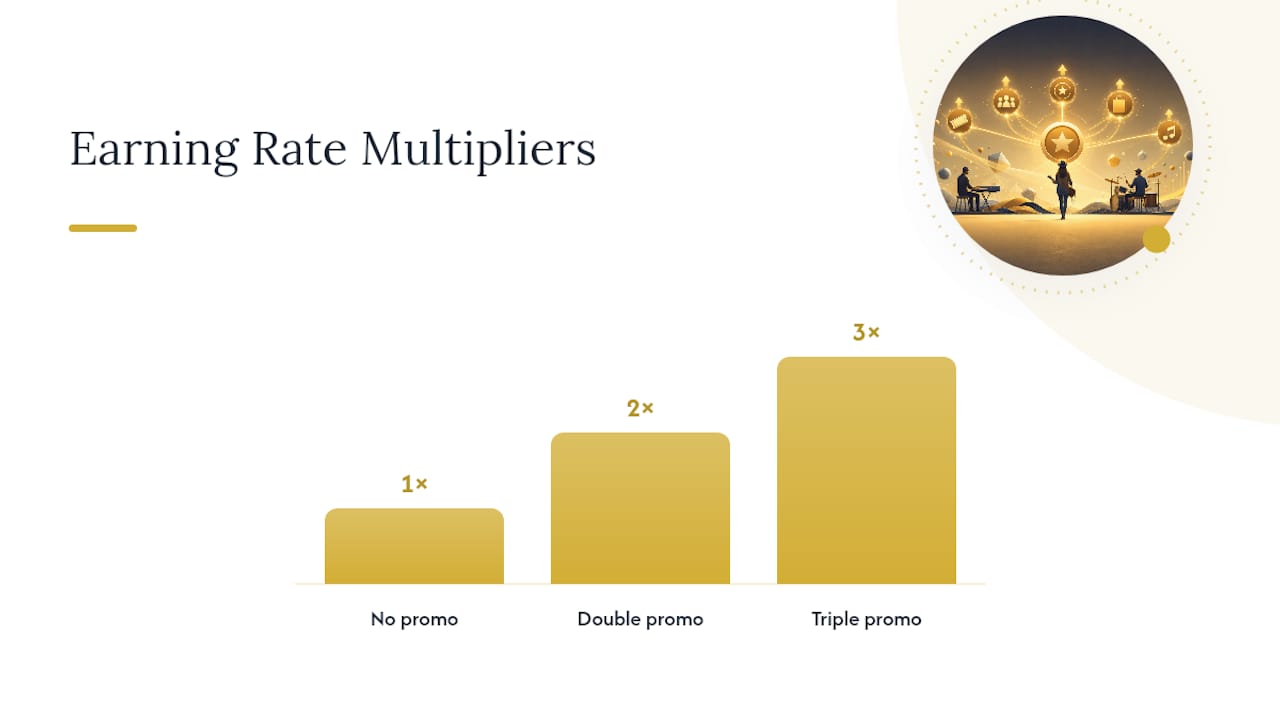
The biggest lever is timing: buy gear you already needed during a promo period that doubles or triples the earning rate, rather than buying something extra just to chase points. Stack sign-up bonuses, review incentives, and seasonal multipliers when they line up with a purchase you were making anyway. Joining an artist or label mailing list can also surface bonus offers that don’t show up on the main storefront.
The most common mistakes:
- Letting points expire because there was no reminder or calendar note
- Forgetting that tax and shipping don’t count toward earning or redemption
- Treating 1,000 points as automatically worth more than 100, without checking the actual conversion
Pro Tip: Before checkout, ask yourself: would I buy this without the points? If the answer is no, the points aren’t a discount, they’re a reason to overspend.
Why Does Point Visibility and Expiration Design Matter?
Points only work as an incentive if you actually see and use them. Retailers that keep balances visible at checkout, rather than buried in an account tab, tend to earn more redemptions because points require action, unlike automatic cash back.
Automated expiration reminders exist because retailers know unclaimed points are wasted goodwill. Programs that send alerts before points lapse see members come back and redeem rather than lose the balance entirely.
Favor programs that show your balance clearly and warn you before expiration, not ones that make you dig for it.
A Publisher’s View on Points and Gear Value
Points should never be the reason you buy a cymbal or a stick set. At Temple of Sound, we built rewards to sit on top of gear you’d want regardless, supporting a community of drummers rather than nudging anyone toward purchases they don’t need.
Join Temple of Sound Rewards
Temple of Sound’s membership pairs points earned on every purchase with member-only pricing and early access to limited cymbal and drumstick drops, so the discount compounds instead of sitting flat. Joining takes a few minutes: create an account, opt into rewards, and your next order starts accruing automatically.

If you’re stocking up on sticks or eyeing a new cymbal pack, check your balance and membership tier on the Temple of Sound site before your next order, so any available credit applies at checkout instead of going unused.
Sources
- CleverTap — Loyalty Points Guide
- S Loyalty — Introducing automatic points expiration
- Rewards - uDiscover Music