12 August 2026
Dark vs Bright Cymbals: Which Sound Fits Your Kit?
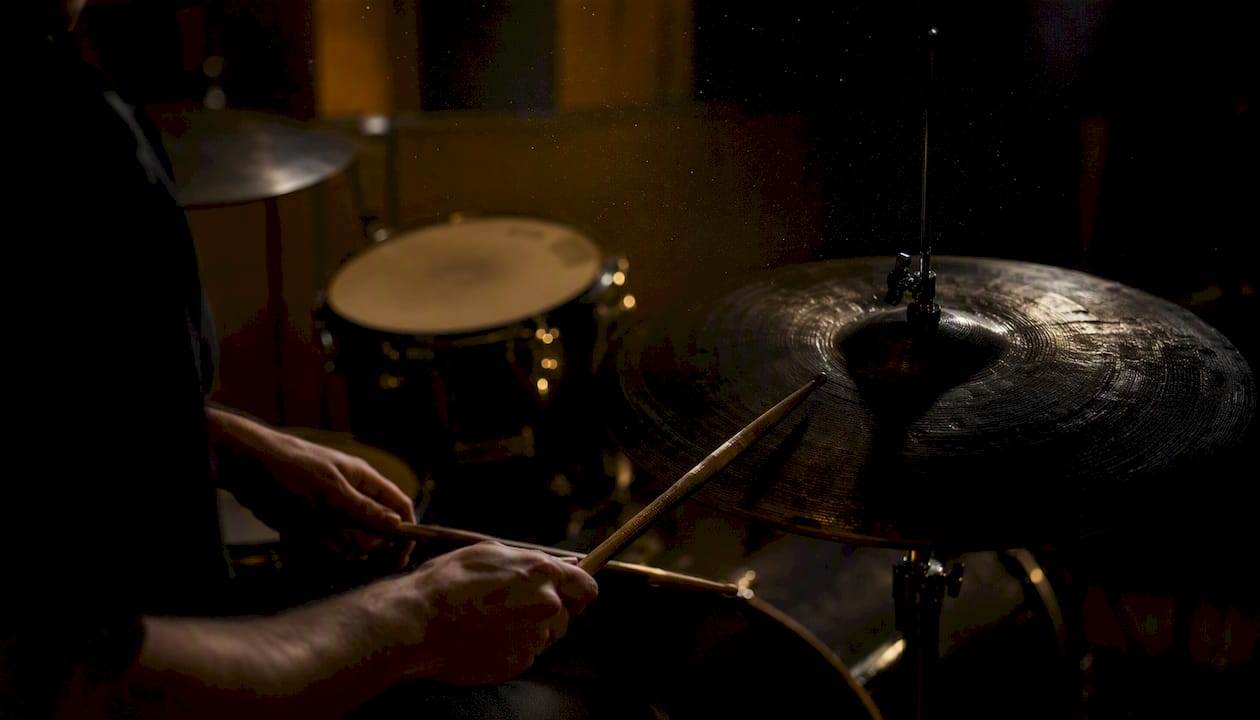
Dark vs Bright Cymbals: Which Sound Fits Your Kit?
Bright cymbals cut through loud stages; dark cymbals blend into mixes and warm up recordings. That’s the short version. If you’re building a kit and need a fast rule: reach for bright when you need projection and articulation, dark when you need texture and control.
- If you play rock, metal, or pop on loud stages, a bright cymbal’s high-frequency attack will read through the band.
- If you record, play jazz, or work in intimate acoustic settings, a dark cymbal’s lower-mid emphasis sits in the mix without competing with vocals or guitars.
- For a versatile kit, pair a dark ride with a bright crash — you get pocket and cut from the same setup.
Key Takeaways
Bright cymbals project through loud mixes; dark cymbals blend into them — and most professional kits use both deliberately.
| Point | Details |
|---|---|
| Bright = projection, dark = blend | Bright cymbals emphasize high frequencies for loud stages; dark cymbals emphasize lower-mids for studio and jazz. |
| Finish is the fastest predictor | Brilliant (polished) finishes push brightness; natural or raw finishes produce warmth and darkness. |
| Dark cymbals aren’t quieter | Perceived intrusiveness is about frequency content, not maximum volume — dark cymbals can be played loud. |
| Build kits with both | Start with a dark or bright ride, then pick crashes that complement it; most pro setups mix tonal characters. |
| Templeofsound B20 range | Handcrafted B20 cymbals in natural and brilliant finishes cover both dark and bright needs for studio and stage. |
Table of Contents
- What’s the real difference between dark vs bright cymbals?
- What makes a cymbal sound dark, and is it actually quieter?
- How does construction actually make a cymbal bright or dark?
- How does size and weight change what you hear?
- Live vs studio: which cymbal type actually works better?
- How do you build a kit that uses both dark and bright cymbals?
- Common myths about dark and bright cymbals, answered
- The case for trusting your ears over the label
- Templeofsound’s handcrafted B20 cymbals cover both ends of the spectrum
- Sources
What’s the real difference between dark vs bright cymbals?
Bright cymbals emphasize higher frequencies with a glassy, cutting attack that projects through dense mixes. That top-end energy is what makes them audible in loud band contexts where guitars and bass are competing for the same sonic space.
Physically, brightness comes from a combination of polished finishes, thinner profiles, and tighter lathing. A brilliant-finish cymbal reflects more high-frequency energy than a raw or natural-finish one. Thinner profiles flex more freely, which produces faster attack and a longer, shimmering sustain. These traits make bright cymbals the go-to for rock, metal, and pop drummers who need their hi-hat chick or crash to register clearly in a live room or a dense mix.
What to listen for in-store:
- Stick articulation: tap the bow and listen for a clean, defined “ping” with no muddiness
- Bell clarity: strike the bell and check whether it rings out with a clear, cutting tone
- Wash character: let the cymbal sustain and notice whether the wash is bright and shimmery or complex and smoky
- Attack definition: a bright cymbal should have an immediate, glassy response at low velocity, not just at full force
Pro Tip: If a bright cymbal sounds harsh in the room, it doesn’t have to sound harsh in the recording. Pulling overhead mics back 6–8 inches and rolling off a shelf above 12 kHz can tame brittleness without losing the attack character that made you choose the cymbal in the first place.
What makes a cymbal sound dark, and is it actually quieter?
Dark cymbals place emphasis on lower and middle frequencies, producing a warm, complex, smoky tone that integrates into a mix rather than cutting above it. Jazz drummers have leaned on this quality for decades, but dark cymbals show up in indie, folk, and studio work for the same reason: they support the music without demanding attention.
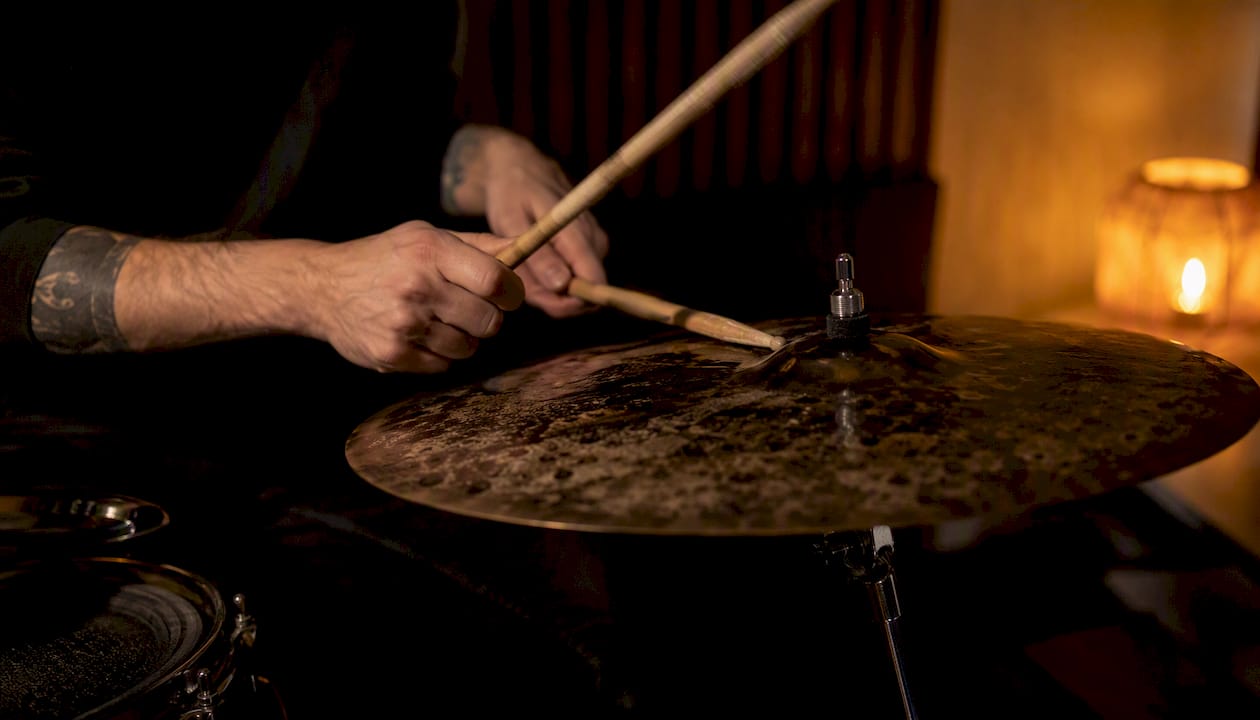
A common misconception is that dark cymbals are quieter. They’re not, at least not objectively. The difference is frequency content, not maximum volume. A dark cymbal can be played at high SPL, but its energy sits in a range that feels less piercing to the ear. That’s why they feel less intrusive in a room, even when the drummer is hitting hard.
In-store play-test checklist for dark cymbals:
- Wash density: let the cymbal ring and listen for a rich, layered wash rather than a single shimmery tone
- Stick-in-the-pocket feel: does the stick rebound feel controlled and “dry,” or does it bloom into a long sustain?
- Bell integration: on a dark cymbal, the bell should blend into the overall voice rather than ring out separately
- Low-velocity response: dark cymbals should still speak clearly at soft dynamics, not just when struck hard
Pro Tip: Dark cymbals can disappear in a loud, unmic’d band context. If you play dark but need presence in a loud rehearsal room, go one weight class heavier than you’d normally choose. A medium-heavy dark ride will project more than a thin one while keeping its tonal character.
How does construction actually make a cymbal bright or dark?
The single most important physical drivers of brightness and darkness are finish, hammering density, alloy composition, and profile. Marketing labels like “warm” or “cutting” follow from these choices — understanding the mechanics lets you evaluate any cymbal beyond the tag on the shelf.
Brilliant (polished) finishes enhance high frequencies and produce a brighter, more cutting sound. Natural or raw finishes reduce top-end energy and yield a darker, warmer tone. This is one of the most reliable predictors of a cymbal’s character before you even strike it.
How each construction factor shapes the sound:
- Alloy: B20 bronze (80% copper, 20% tin) paired with hand-hammering and raw finishes tends toward darker, more complex tones. B8 alloys typically produce a brighter, more focused sound.
- Finish: Brilliant (mirror-polished) = more top-end energy. Natural/unlathed = warmer, drier character.
- Lathing: Fully lathed surfaces produce more high-frequency shimmer. Partially lathed or raw surfaces add complexity and reduce sustain.
- Hammering: Dense, irregular hand-hammering creates complex overtones and a darker wash. Machine hammering produces a more consistent, often brighter response.
- Bell size and taper: A larger bell projects more high-frequency cut. A smaller, integrated bell blends into the cymbal’s overall voice.
- Profile: High-profile (more curved) cymbals tend toward brightness and projection. Low-profile cymbals sit darker and drier.
The interaction between these factors is where it gets interesting. A thin, fully lathed cymbal with a brilliant finish will be bright even if the alloy is B20. Conversely, a B20 cymbal with heavy hand-hammering and a raw finish will be dark even if it has a relatively high profile. Manufacturers exploit this by tweaking bell size and blade lathing to produce hybrid cymbals that are dark in wash but still deliver authoritative bell cut — proof that the bright/dark binary is a starting point, not a fixed rule.
The most useful mental model: polish and thin profiles push energy upward in the frequency spectrum; raw finishes and heavy hand-hammering spread it across a wider, lower range. Every construction choice is a vote for one direction or the other.
Pro Tip: When evaluating a cymbal in a store, ask the staff whether it’s fully lathed or partially raw. That single question will tell you more about its tonal direction than the model name.
How does size and weight change what you hear?
Smaller and thinner cymbals generally read brighter; larger and heavier ones tend darker, with faster decay on thin crashes and more body on heavier ones. That’s the rule of thumb, but cymbal type matters just as much as diameter.
Hi-hats: The pairing of top and bottom plates determines crispness. A heavier bottom with a lighter top produces a tight, crisp chick with a defined edge sound. Matching weights produce a fuller, washier response that reads darker. Thinner tops open up faster and sound airier.
Crashes: Thinner, smaller crashes read brighter with faster decay. A 16" thin crash will cut immediately and die quickly. A 19" medium-heavy crash gives more body and sustain, which can read darker depending on its profile and finish.
Rides: This is where weight has the most dramatic effect. A thin ride produces a washy, dark response with minimal stick definition. A heavy ride gives clear stick articulation and a more cutting, brighter bow sound. Medium-weight rides sit between the two and are the most versatile for mixed-genre playing.
Example kit configurations:
- Bright overall kit: 14" medium hi-hats, 17" thin crash, 20" medium-heavy ride with brilliant finish
- Dark overall kit: 14" heavy/heavy hi-hats, 18" medium crash with natural finish, 20" thin dark ride
- Mixed kit: 14" medium hi-hats, 17" thin bright crash, 18" dark crash, 20" medium dark ride
Play-test checklist for size and weight:
- Attack clarity: does the stick strike produce a defined initial sound, or does it bloom immediately into wash?
- Decay length: count how long the cymbal sustains after a single strike at medium velocity
- Kick/snare relationship: play the cymbal in rhythm with a kick pattern and check whether it competes or complements
- Dynamic range: play softly, then hard — does the cymbal’s character stay consistent, or does it change dramatically?
Pro Tip: Before committing to a ride size, play it with your snare. A ride that sounds perfect in isolation can clash badly with a snare’s fundamental pitch. The two instruments share more sonic real estate than most drummers expect.
Live vs studio: which cymbal type actually works better?
On loud stages, prefer projection. In the studio and intimate rooms, prefer blend and control. That broad rule holds in most situations, though the specifics depend on how you’re mic’d.
Recording engineers often prefer darker ride designs because they avoid high-frequency spikes that can dominate overhead mics. A bright cymbal recorded with a pair of overheads in a small room can easily become the loudest element in a mix, requiring significant corrective EQ that can make the whole kit sound processed. Dark cymbals tend to require less corrective processing, which is why studio drummers often keep a dark ride specifically for sessions even if they use a brighter setup live.
Mic and EQ considerations:
- Overhead mics: dark cymbals sit naturally in overhead captures; bright cymbals may need a high-shelf cut above 10 kHz to prevent harshness
- Close mics: a spot mic on a bright ride can be pulled back 2–3 inches to reduce attack transient without losing definition
- In-ears/FOH: bright cymbals translate well through PA systems; dark cymbals may need a presence boost around 5–8 kHz to cut through in-ear mixes
- Room acoustics: in a live, reverberant room, dark cymbals can get muddy; bright cymbals stay defined
Checklist for communicating with your engineer:
- Tell them whether you want the cymbal to “cut” (bright, forward in the mix) or “texture” (dark, supportive)
- Specify whether you’re playing the ride as a primary rhythmic voice or as background color
- Ask whether they prefer to close-mic the ride or rely on overheads — this affects which weight and finish will work best
Pro Tip: If you’re tracking in a studio for the first time, bring both a bright and a dark cymbal for the ride position. Let the engineer choose after hearing both in the room. Most will pick the darker option, but the choice should come from the room, not the assumption.
How do you build a kit that uses both dark and bright cymbals?
Start with your ride. It’s the cymbal you’ll play most, and its tonal character sets the foundation for everything else. Choose a dark ride if you want pocket and blend; choose a bright ride if you need cut and articulation. Then pick crashes that complement rather than duplicate it.
8-point in-store and at-home play-test checklist:
- Play the ride at your normal velocity for 30 seconds — does it stay controlled, or does it build into an unmanageable wash?
- Strike the bell and check whether it cuts clearly above the bow sound
- Play a hi-hat pattern and listen for how the ride sits relative to the hi-hat’s frequency range
- Crash the crash cymbal and time the decay — does it clear before the next phrase?
- Play crash and ride together and check whether they clash or complement
- Play everything with a kick pattern and listen for frequency conflicts
- Test at low volume — a good cymbal should still speak clearly when you’re playing softly
- Record yourself on a phone and listen back — the room flatters cymbals in ways a recording doesn’t
Genre-based kit pairings:
- Jazz/indie/studio: Dark ride (thin to medium), dark crash (medium, natural finish), medium hi-hats with heavy bottom. The goal is a cohesive, warm voice that supports the ensemble.
- Rock/metal/pop: Bright ride (medium-heavy, brilliant finish), bright or medium crash (thin to medium), medium hi-hats. Projection and articulation are the priority.
- Singer-songwriter/folk: Dark or medium ride, one medium crash, light hi-hats. The kit should disappear behind the acoustic instruments when needed.
Most professional setups use a mix. A dark ride with one bright crash and one dark crash gives you three distinct tonal options from three cymbals. Experts consistently recommend a mixed approach for exactly this reason: versatility within a single kit setup.
Common myths about dark and bright cymbals, answered
Are dark cymbals quieter than bright cymbals? No. Dark cymbals feel less piercing because their energy sits in lower and mid frequencies, but maximum volume is a function of how hard you strike, not tonal character. The difference is frequency content, not SPL.
Are dark cymbals good for jazz? Yes, and for a specific reason: jazz drummers need cymbals that support the ensemble without cutting above it. Dark cymbals’ lower-mid emphasis and complex overtones integrate into the acoustic space rather than dominating it. That said, some jazz players use bright cymbals deliberately for a more cutting, modern sound.
Do bright cymbals always sound harsh? Not in context. A bright cymbal that sounds aggressive in a quiet room often sits perfectly in a loud band mix. The harshness you hear in isolation is the same energy that lets it project through guitars and bass. Mic placement and EQ can tame brightness in the studio without losing the attack character.
Can a cymbal be both dark and bright? Yes. Bell size, blade lathing, and hammer patterns can produce hybrid behaviors — a cymbal that’s dark in its wash but delivers a clear, cutting bell tone. These designs show that the dark/bright spectrum is continuous, not binary.
A cymbal’s value in a mix is about how it “sits” — dark cymbals integrate without competing with vocals or guitars, while bright cymbals are engineered to cut through. Choosing between them is less about preference and more about the job the cymbal needs to do.
Pro Tip: Before deciding a cymbal is “too bright” or “too dark,” play it with the full band at rehearsal volume. Solo cymbal tests in a quiet store are useful for comparison but rarely predict how a cymbal behaves in its actual environment.
The case for trusting your ears over the label
Most drummers spend too long reading about bright vs dark and not enough time standing in front of a kit with sticks in hand. The tonal vocabulary matters — knowing that a brilliant finish pushes high-frequency energy, or that B20 with hand-hammering tends toward complexity, gives you a framework for evaluating what you’re hearing. But the framework is a starting point, not a verdict.
The players who build the most distinctive sounds are usually the ones who break the expected pairing. A dark cymbal in a metal context creates a signature texture that cuts through differently than a bright one. A bright ride in a jazz trio can give a modern, forward sound that sets a player apart from the crowd. The genre rules exist because they work for most situations, not because they’re the only option.
What actually matters is whether the cymbal serves the music you’re making right now, in the room you’re playing in, with the band you’re playing with. That answer changes. A cymbal collection that covers both ends of the spectrum gives you the flexibility to make that call on the fly.
Templeofsound’s handcrafted B20 cymbals cover both ends of the spectrum
Templeofsound’s handcrafted B20 cymbals give you a direct path to both dark and bright options without guesswork. B20 alloy is the foundry standard for complex, responsive tone, and the finish and hammering choices available through Templeofsound let you dial in exactly the tonal direction this guide describes.

For studio work or jazz, a B20 cymbal with a natural finish and heavy hand-hammering delivers the dark, complex wash that sits cleanly under overheads. For live rock or pop, a B20 with a brilliant finish and tighter lathing gives you the projection and attack to cut through a loud stage mix. Templeofsound stocks both profiles, along with curated cymbal packs designed to give your kit a coherent voice across the full dark-to-bright range. Visit Templeofsound to browse the current range or get in touch for a consultation on which finish and weight combination fits your setup.
Sources
- Dark vs Bright Cymbals – What’s Best For You? - Andertons Blog
- The Difference Between Brilliant and Natural Finish - SABIAN Cymbals
- Zildjian K Custom Dark Ride vs Sabian HHX Evolution Ride - Cymbal Archive
- Dark vs Bright: The Secret to Finding Your Perfect Cymbal Setup
- Meinl Big Bell Rides Comparison - Blog - Meinl Cymbals