30 August 2026
Stop Keyholing: Cymbal Sleeves Explained for Gig Ready Drummers
Stop Keyholing: Cymbal Sleeves Explained for Gig Ready Drummers
A cymbal sleeve is the small plastic or rubber tube that lines the stand’s post so bare metal never touches your cymbal’s bell. Without one, that constant metal-on-metal contact wears an oval groove into the mounting hole, called keyholing, which weakens the cymbal and eventually cracks it. Sleeves always work alongside felts and a washer, and getting that stack right is the difference between a cymbal that lasts decades and one that splits in two years.
TL;DR:
- Using the correct size and material sleeve prevents keyholing and crack development in cymbals, especially with heavier ride cymbals exerting more force.
- Proper stack order, with sleeves and felts snugly fitted but not overtightened, ensures natural cymbal movement and reduces wear.
- Regularly inspecting the center hole for oval distortion and replacing sleeves and felts early can avoid costly cracks and breakage.
- Matching sleeve materials and size to your stand’s post diameter and type increases stability and lifespan of the cymbals.
- Keeping spare sleeves, felts, and wingnuts in your gig bag can prevent damage from hardware failure during performances.
Table of Contents
- What Cymbal Sleeves Are and How They Protect Cymbals
- How to Fit a Cymbal Sleeve With Felts and a Wingnut
- Cymbal Sleeve Types and Materials Worth Knowing
- Troubleshooting Keyholing, Cracking, and Slipping
- Buying the Right Sleeves and Building a Spare Kit
- Low-Cost Alternatives and Routine Maintenance
- Temple of Sound’s Take on Cymbal Hardware
- Why Most Drummers Get Sleeve Maintenance Backwards
- Get Your Cymbal Hardware Sorted With Temple of Sound
- Sources
What Cymbal Sleeves Are and How They Protect Cymbals
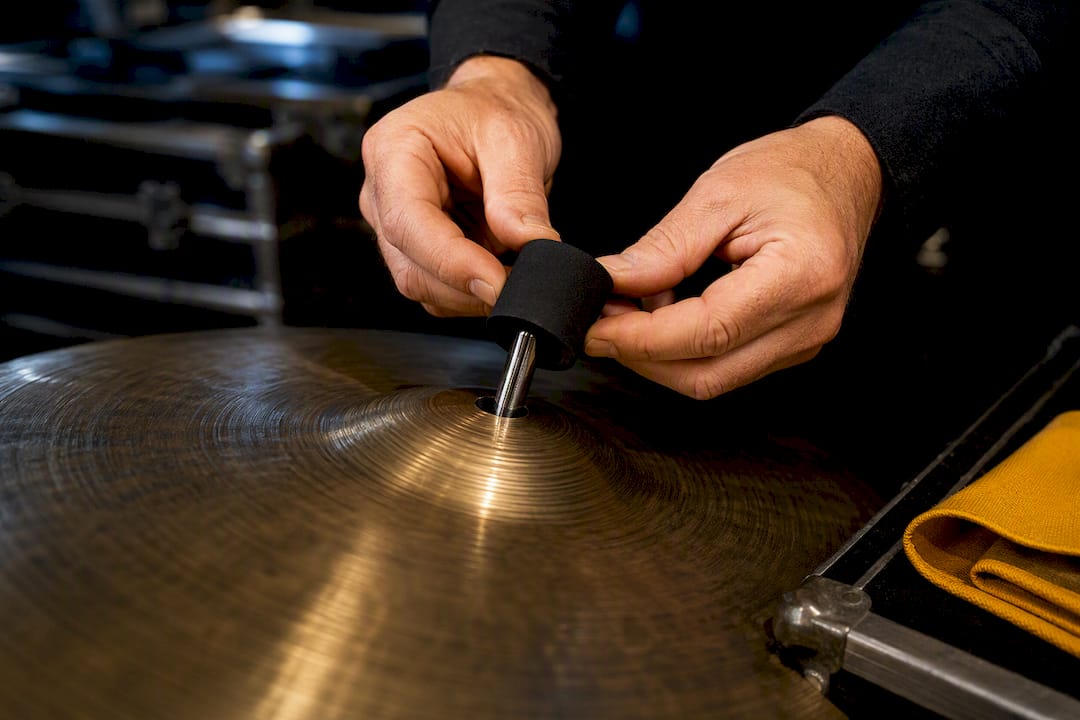
The sleeve slides down over the stand’s post, sitting inside the cymbal’s center hole so the metal edge never rests against bare steel. Picture it as a tiny bushing: soft on the outside, snug around the post on the inside, doing one job and doing it constantly every time the cymbal shakes on its stand.
Without that buffer, the post rubs against the hole with every strike and every vibration. Over months, that friction wears the hole into an elongated oval shape, the keyhole effect, and once the metal is thinned that unevenly, a crack usually follows. Modern Drummer’s breakdown of cymbal stand hardware confirms sleeves and felts exist specifically to stop that wear while still letting the cymbal move naturally.
Heavier rides take the brunt of this more than thin crashes, simply because their mass generates more force against the post with every hit. A few things drive the damage pattern:
- Bare metal-to-metal contact concentrates stress at one point on the bell’s inner edge.
- Repeated vibration slowly elongates that contact point into an oval.
- A thinned, oval hole is far more prone to sudden cracking under a hard hit.
- Heavier cymbals like rides put more sustained pressure on the post than lighter crashes.
How to Fit a Cymbal Sleeve With Felts and a Wingnut
Getting the stack order right matters as much as having the parts in the first place. Here’s the sequence that works on nearly every stand:
- Slide the sleeve down over the post first, letting it settle into position.
- Place the bottom felt over the sleeve so it rests flat on the stand’s felt or tilter.
- Lower the cymbal down onto the sleeve and bottom felt.
- Add the top felt on top of the cymbal.
- Screw on the wingnut, tightening just until it holds everything snug.
The wingnut should never be cranked down hard. GeekStands’ setup guidance notes the felts exist to cushion the cymbal, and if you overtighten past that point, you choke the cymbal’s natural movement and set it up for exactly the kind of cracking sleeves are meant to prevent.
Posts come threaded or unthreaded depending on the stand, and sleeves come in long and short versions to match. Long sleeves generally cover more of the post and suit taller cymbal stacks or multi-cymbal setups.
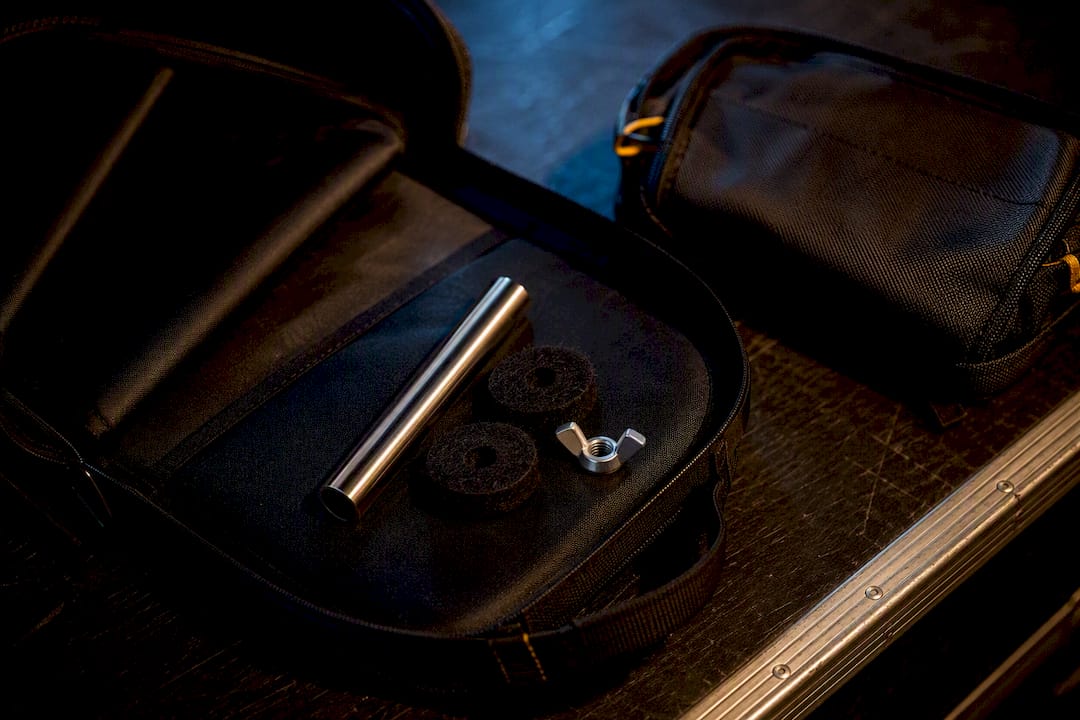
Pro Tip: Keep a spare 8mm long sleeve, a pair of felts, and an extra wingnut in your stick bag. Ben Woollacott’s advice on gig-ready spares has saved plenty of players from a keyholed cymbal on a borrowed house kit.
Cymbal Sleeve Types and Materials Worth Knowing
Not every sleeve is built the same, and the material changes how the cymbal actually feels while playing. Softer rubber and plastic sleeves let the cymbal wobble and breathe more freely, which most drummers prefer for natural sustain and movement.
- Standard plastic or rubber tube sleeves fit snugly over the post and allow normal cymbal shake.
- Flanged sleeves have a wider lip at the top that sits between the cymbal and the top felt, adding extra stability on stands where cymbals tend to slide around.
- No-thread, squeeze-fit sleeves, sometimes marketed as no-nut styles, snap over the post without threading and speed up mounting between songs. The No Nuts sleeve is one example of this squeeze-fit approach built for 6mm and 8mm posts.
Match the sleeve to your post diameter first. Most stands use either 6mm or 8mm threaded posts, and a sleeve built for the wrong size will either spin loose or refuse to slide on at all.
Troubleshooting Keyholing, Cracking, and Slipping
Catching wear early costs you nothing but a glance. Check the cymbal’s center hole every few months; if it’s stretched into an oval instead of staying round, that’s early keyholing, and it’s time to swap in a fresh sleeve before the metal thins further.
Cracking almost always traces back to one habit: cranking the wingnut too tight. The GeekStands guidance is blunt about this. Tighten just enough to hold the stack together, nothing more.
- Oval-shaped center hole: replace the sleeve and felts immediately.
- Cracks radiating from the bell: the sleeve was likely missing or the wingnut over-tightened.
- Cymbal slipping or spinning on the stand: add a felt washer beneath the bottom felt, or switch to a flanged sleeve for a tighter grip.
- Cracked or flattened felts: swap them out; compressed felt no longer cushions the metal properly.
Pro Tip: If a cymbal wobbles more than usual after tightening, loosen the wingnut a quarter turn before assuming the sleeve itself has failed. It’s often just too much clamping pressure.
Buying the Right Sleeves and Building a Spare Kit
Sizing comes down to two numbers: 6mm and 8mm posts cover the vast majority of stands on the market, so check your hardware before ordering. Long sleeves suit taller boom stands and multi-tier setups; short sleeves work fine on standard single-cymbal stands.
A basic gig-ready kit should include:
- Two or three spare sleeves in both 6mm and 8mm sizes.
- Four to six extra felts, since these wear out faster than sleeves.
- A couple of spare wingnuts, which strip or get lost more often than you’d expect.
Avoid sleeves that feel rock hard or overly stiff. A cymbal felt and sleeve pack sold as a spare-parts set notes that quality components add durability without noticeably affecting sustain, but a sleeve that’s too rigid will choke the cymbal’s natural movement regardless of material quality.
Low-Cost Alternatives and Routine Maintenance
Left without a proper sleeve at a gig, aquarium tubing is the standard emergency fix. DrumLesson’s guide to cymbal care recommends cutting a length to match your sleeve size, since the tubing’s inner diameter usually matches 6mm and 8mm posts closely enough to work.
- Gaffer tape wrapped around the post works in a pinch but wears through fast and leaves residue.
- Check felts for flattening or splits every few weeks of regular playing.
- Wipe down sleeves and posts when you clean your cymbals to catch grit before it grinds against the metal.
Temple of Sound’s Take on Cymbal Hardware
Temple of Sound is the UK’s exclusive distributor for Alchemist Cymbals and the London Drumstick Co., which means cymbal longevity isn’t an abstract concern here, it’s the daily business…
For deeper reading on protecting your cymbals long term, the guides on cymbal care and cleaning and splash cymbal sizing cover related maintenance ground this article doesn’t.
Why Most Drummers Get Sleeve Maintenance Backwards
Most players think about cymbal sleeves exactly once: the day one cracks. That’s backwards. The whole point of a sleeve is that it’s cheap insurance against a problem that’s expensive and permanent once it happens. A $30 ride cymbal sleeve costs a fraction of what a replacement ride costs, yet I’d guess most working drummers couldn’t tell you the last time they swapped their felts.
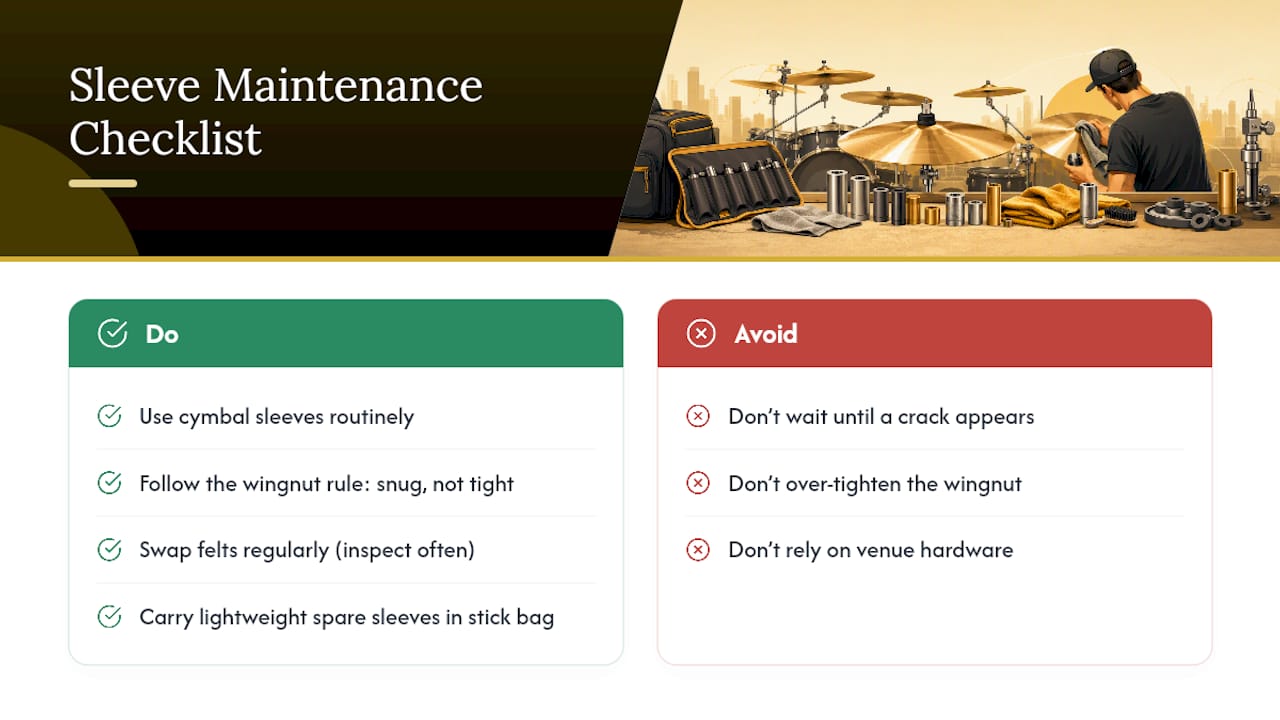
The conventional advice, “just use sleeves,” undersells the real skill here, which is tension control. Over-tightening does more damage over a drummer’s career than missing sleeves ever will, because it’s a habit rather than a one-time oversight. If you take one thing from this guide, make it the wingnut rule: snug enough to hold, loose enough to let the cymbal breathe.
Gig-bag spares matter more than most players admit, too. House kits at venues are notorious for missing or mismatched hardware, and a stripped-down spare kit weighing almost nothing in your stick bag has saved more cymbals than any amount of careful playing technique.
— Will
Get Your Cymbal Hardware Sorted With Temple of Sound
Sourcing the right sleeves, felts, and wingnuts shouldn’t mean hunting through generic hardware bins that don’t match your stand’s post size. Temple of Sound stocks the accessories that pair directly with the Alchemist Cymbals range, so you’re matching sleeves to the exact posts and cymbal weights they’re built for, not guessing.

If you’ve just read through the fitting steps above and realized your current felts are flattened or your spare kit is empty, that’s the moment to act. Browse the full range of cymbals and stand accessories at Temple of Sound and build a gig-bag kit that won’t let you down on the next borrowed house stand.
Sources
- What You Need to Know About…Cymbal Stands — Modern Drummer
- Cymbal care — DrumLesson
- 60sec Tip Bits #2 – Cymbal Sleeves — Ben Woollacott
- How to properly set up your cymbal stand for optimal performance — GeekStands