12 August 2026
Crash vs Ride Cymbals: What Every Drummer Should Know
Crash vs Ride Cymbals: What Every Drummer Should Know
A crash is an accent cymbal. A ride is a timekeeping cymbal.
Here’s the quick version:
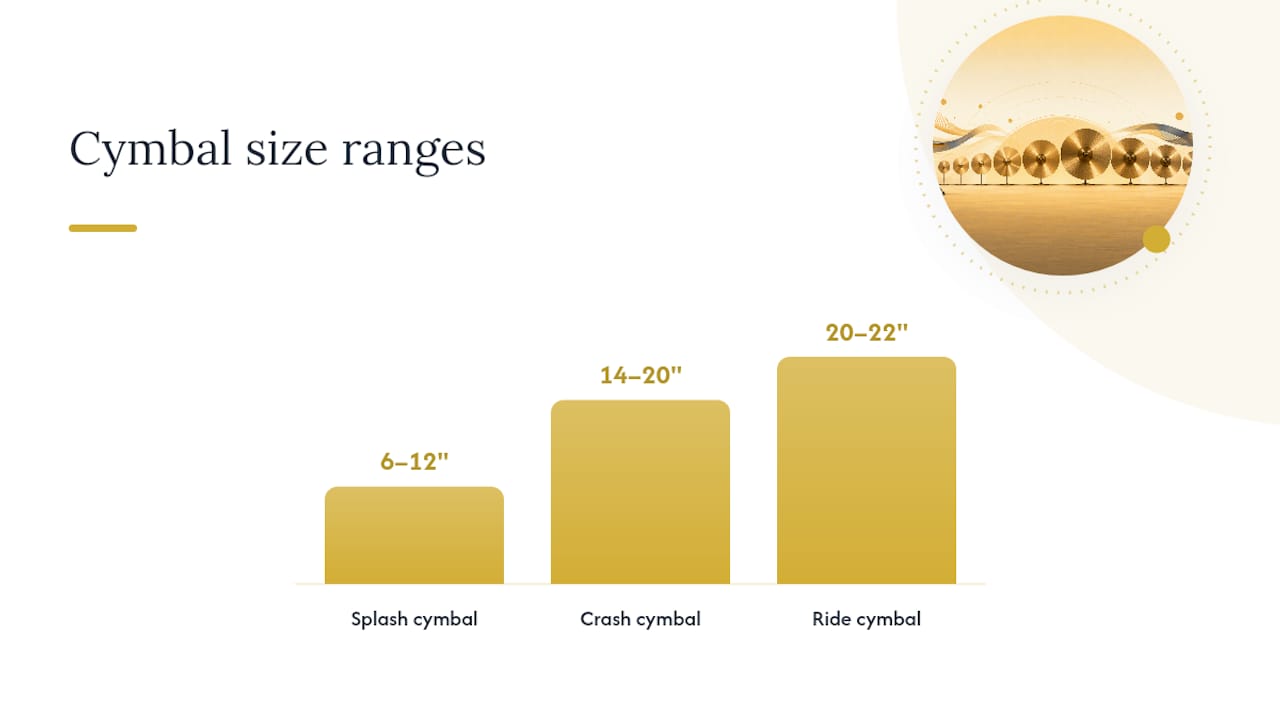
- Crash: 14"–20" diameter, thin and tapered, small bell, struck on the edge with the shoulder of the stick for a fast, explosive burst of sound that decays quickly
- Ride: 20"–22" diameter, heavier and thicker, large and playable bell, struck on the bow with the tip of the stick for a clear, defined ping that sustains
- Crash/ride hybrid: 18"–22", medium weight, designed to do both jobs at a compromise — useful on minimal kits
It produces the complex, warm overtones that separate a quality crash or ride from a cheaper brass alternative.
Key Takeaways
Crash and ride cymbals serve opposite musical roles, and their physical differences — size, weight, bell, and profile — are what make those roles possible.
| Point | Details |
|---|---|
| Function is the core difference | Crashes accent; rides keep time. Choose based on the musical job, not the look. |
| Size and weight identify the cymbal | Crashes run 14"–20"; rides run 20"–22". Heavier and thicker always points to a ride. |
| Bell size is the fastest visual cue | A large, prominent, playable bell means ride. A small, flat bell means crash. |
| Hybrids work for minimal kits | An 18"–22" crash/ride covers both roles at a compromise — practical for beginners and compact setups. |
| Templeofsound for curated B20 options | Handcrafted Alchemist Cymbals, curated packs, and custom stick pairing available at Templeofsound. |
Table of Contents
- What crash and ride cymbals actually do on a kit
- How crash and ride cymbals compare side by side
- How to tell which cymbal you’re looking at
- Can you use a crash as a ride, or a ride as a crash?
- Crash/ride hybrids: what they are and when they make sense
- What to listen and feel for when buying a cymbal
- What actually drives my cymbal choices
- Templeofsound’s curated cymbals, built for how you actually play
- Sources
What crash and ride cymbals actually do on a kit
Every cymbal on a drum kit has a job. The crash’s job is to punctuate. Think of it as the exclamation point at the end of a musical phrase — a fill, a chorus hit, a dramatic moment. You strike it hard, it explodes, and it decays. That’s the entire design brief.
The ride’s job is the opposite: consistency. Crashes are thinner and designed for explosive accents, while rides provide stick definition and sustain suited to timekeeping. A ride keeps the groove moving through an entire verse or chorus without washing out the rest of the kit. Jazz drummers ride on it for whole songs. Rock drummers use it when the hi-hat isn’t cutting through.
Where you strike each cymbal matters as much as which cymbal you pick:
- Crash: Strike the edge with the shoulder of the stick, angled so the stick glances off rather than punching straight down. A straight-down hit on a thin crash edge is the fastest way to crack it.
- Ride bow: Use the tip of the stick on the upper surface, roughly halfway between the bell and the edge. This produces the classic “ping” with stick definition.
- Ride bell: Strike with the shoulder of the stick directly on the bell for a sharp, cutting accent — common in Latin and jazz.
- Ride edge: You can crash a ride on its edge, though the sound is darker and slower to open than a dedicated crash.
Pro Tip: When auditioning a ride in a practice room, play your actual groove pattern on it for 30 seconds before judging the sound. A ride that sounds beautiful as a single tap can feel washy and undefined once you’re playing eighth notes at tempo.
How crash and ride cymbals compare side by side
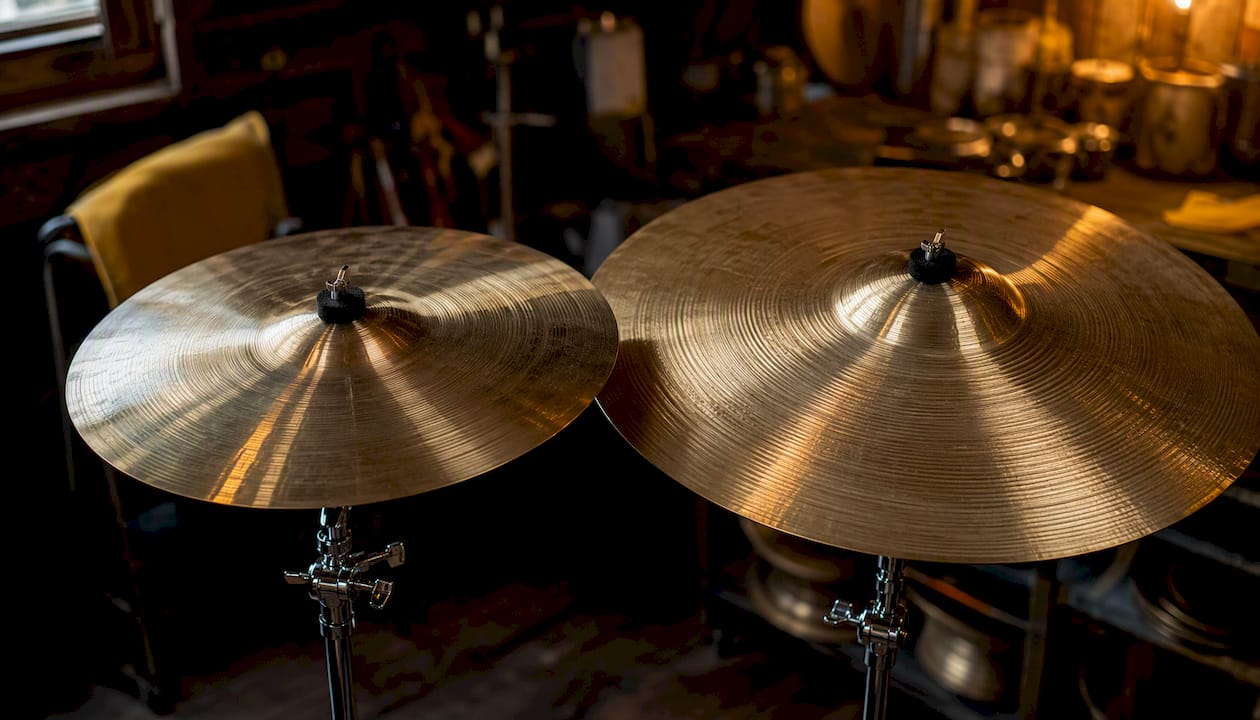
The physical differences between these two cymbal types are not cosmetic. Size, weight, and profile are the primary factors that determine a cymbal’s response: thicker and larger cymbals sustain longer and respond more slowly, while thinner and smaller cymbals respond faster with shorter decay. That’s the engineering reason a crash sounds like a crash and a ride sounds like a ride.
| Dimension | Crash | Ride |
|---|---|---|
| Primary function | Accent, impact, dramatic hit | Steady timekeeping, rhythmic pattern |
| Typical size range | 14"–20" (16" and 18" most common) | 20"–22" |
| Weight and profile | Thin, low-to-medium profile, tapered edge | Heavy, medium-to-high profile, thick edge |
| Bell size and use | Small bell, rarely used for timekeeping | Large, prominent bell — intentionally playable |
| Sound character | Fast attack, short decay, full wash | Defined ping, long sustain, controlled wash |
| Where you hit it | Edge (shoulder of stick) | Bow (tip of stick), bell (shoulder of stick) |
| Common genres and roles | Rock, metal, pop — accents and fills | Jazz, funk, rock — groove and pattern keeping |
A few things worth expanding on. The bell difference is significant. Many ride cymbals have a well-pronounced bell that is intentionally playable for articulated accents and syncopated patterns. A crash bell exists but is rarely the point. If you’re looking at a cymbal and the bell is large, domed, and prominent, you’re almost certainly looking at a ride.
The size overlap between a large crash (18"–20") and a small ride (20") is real, and it’s where most confusion happens. At 20", the weight and profile of the cymbal are what separate them, not the diameter alone.
A quick note on splash cymbals: Splashes sit below crashes in size, typically 6"–12". They’re even thinner and faster-decaying than crashes, used for quick, light accents. If the cymbal in front of you is tiny and sounds like it barely has any sustain at all, it’s a splash, not a crash.
How to tell which cymbal you’re looking at
You don’t need a spec sheet. A few quick checks will tell you what you’re holding.
Visual cues:
- Diameter: Measure or estimate. Under 18" and it’s almost certainly a crash or splash. 20"+ and it’s likely a ride.
- Bell: A large, cup-shaped, prominent bell points to a ride. A small, flatter bell points to a crash.
- Edge profile: Hold the cymbal at eye level and look at the edge. A thin, tapered edge that curves sharply is a crash. A thicker, more uniform edge is a ride.
Tactile check:
- Press gently on the bow of the cymbal with your palm. A crash flexes noticeably. A ride barely moves. This flex test is surprisingly reliable.
Play test — do these in order:
- Tap the bow with a stick tip. Listen for stick definition. A clear, focused ping = ride. A washy, spread tone = crash.
- Tap the bell with the shoulder of the stick. A musical, focused bell tone = ride. A dull or thin bell response = crash.
- Strike the edge with the shoulder of the stick. A fast, full wash that decays in 2–3 seconds = crash. A slower, darker wash that takes longer to open = ride being crashed.
For online identification: Photograph the cymbal from three angles — directly above (to show diameter and bell), at eye level from the edge (to show profile and taper), and a close-up of the bell. Those three shots give any experienced player or retailer enough to make a confident call.
Crashes are usually positioned to the drummer’s left near the hi-hat, while rides typically sit to the right, outside the floor tom. If you’re looking at a kit and wondering which is which, position alone is often the fastest answer.
Can you use a crash as a ride, or a ride as a crash?
Yes to both, but with real trade-offs you should understand before committing.
Using a ride as a crash:
- The sound is darker and slower to open. You won’t get the fast, explosive wash of a dedicated crash.
- Rides are built to take repeated striking, so durability isn’t the concern here. The concern is musical: the accent won’t cut through the same way.
- In heavier genres, some drummers prefer crashing on a ride for a more controlled, less washy accent. It’s a legitimate choice, not a compromise.
Using a crash as a ride:
- Crashes are thinner and more prone to cracking from repeated rim strikes. Riding on a crash edge repeatedly is a fast track to a cracked cymbal.
- Stick definition suffers. The bow of a crash doesn’t produce the clean ping a ride does, so your groove pattern will sound washy and undefined.
- Some players use crash cymbals to keep time in rock or metal contexts where aggression matters more than articulation. If that’s the sound you want, it works — but play on the bow, not the edge, to protect the cymbal.
Practical scenarios where swapping makes sense:
- Small acoustic kits with limited cymbal real estate
- Rehearsal setups where you’re working with borrowed gear
- Certain punk or garage rock styles where a washy, aggressive ride tone is the goal
If you must use a crash for timekeeping, lighten your touch significantly and play on the bow. The reduced impact extends the cymbal’s life and actually improves stick definition on a thin cymbal.
Crash/ride hybrids: what they are and when they make sense
A crash/ride hybrid is a single cymbal engineered to handle both roles at a compromise. It’s a medium-weight cymbal typically in the 18"–22" range, designed to serve as both a crash and a ride. The taper and weight sit between a dedicated crash and a dedicated ride, so neither function is fully optimized — but both are usable.
There’s also a subtle naming distinction worth knowing: a crash/ride aims for true hybrid balance, while a ride/crash is slightly heavier and less tapered, favoring the ride function. The labeling matters when you’re reading product descriptions.
| Size | Sonic character |
|---|---|
| 18" | Brighter, faster response, crash-leaning |
| 20" | Balanced — usable crash and ride in one |
| 22" | Longer sustain, slower crash, more ride-like |
When a crash/ride hybrid makes sense:
- Minimal kits where you’re limited to two or three cymbals total
- Practice kits where space and budget are the priority
- Bridging the gap between your largest crash and smallest ride on a fuller kit
- Genres like jazz, singer-songwriter, or light pop where dynamic range is moderate and one cymbal can cover both roles
For experienced players, a hybrid is rarely the first choice. Dedicated crash and ride cymbals give clearer articulation and crash dynamics that a hybrid can’t fully replicate. But for a beginner building a first kit, or a touring musician traveling light, a quality 20" crash/ride is a genuinely practical solution.
What to listen and feel for when buying a cymbal
Buying a cymbal without playing it is a gamble. Here’s how to audition properly, whether you’re in a store or evaluating an online listing.
In-store audition checklist:
- Play single hits on the bow with a stick tip. Listen for attack clarity and how quickly the sound decays.
- Play eighth notes at your actual playing tempo for 30 seconds. Does the cymbal wash out and become indistinct, or does it stay defined?
- Tap the bell with the shoulder of the stick. A focused, musical bell tone is a strong indicator of ride suitability.
- Strike the edge hard once. For a crash, you want a fast, full explosion. For a ride, you want a controlled, dark wash.
- Play the same short phrase (kick, snare, cymbal groove) on two or three candidate cymbals back to back. The difference becomes obvious immediately.
What to check in online listings:
- Diameter and weight category (thin, medium, heavy) — these two data points tell you most of what you need
- Alloy: B20 bronze is the standard in professional cymbals and signals a higher-quality tone with more complex overtones than brass alternatives
- Photos showing the bell profile and edge — a side-profile shot is the most informative single image
- Whether the listing specifies crash, ride, or crash/ride
Try a shortlist of two or three sizes in the same weight category before committing. A 16" medium crash and an 18" medium crash feel and sound genuinely different, and the right choice depends entirely on your kit and playing style.
What actually drives my cymbal choices
The conventional wisdom says “get a 16” crash and a 20" ride and you’re set." That’s not wrong, but it’s incomplete. The real question is what your kit sounds like as a whole, not what any single cymbal sounds like in isolation.
For a small kit — three or four pieces, quieter genres — a 16" crash and an 18" ride tend to balance better than the standard setup. The smaller ride keeps the overall volume in proportion, and the 16" crash doesn’t overwhelm the room. For a full gigging kit in a louder context, a 17" or 18" crash paired with a 20" or 22" ride gives you the dynamic range to cut through a band mix without fighting for space.
The part most players skip is auditioning the ride against their actual snare and kick. A ride that sounds perfect solo can clash badly with a dry, cutting snare. Templeofsound’s curated cymbal selections are worth exploring precisely because the curation accounts for this — you’re not just picking a cymbal, you’re picking one that works in context.
Templeofsound’s curated cymbals, built for how you actually play
Most cymbal purchases happen in isolation: you hear one cymbal, you like it, you buy it. What Templeofsound does differently is curate. As the UK’s exclusive distributor for Alchemist Cymbals, Templeofsound offers handcrafted B20 cymbals selected for how they perform together on a real kit, not just how they sound as individual pieces.

Whether you’re building your first kit around a crash/ride hybrid, adding a dedicated ride to a setup that’s been relying on a crash for too long, or looking for a curated cymbal pack that covers crash, ride, and hi-hats in one decision, Templeofsound has options worth your time. Custom stick pairing is also available, so you can match your playing feel to your new cymbal from the first hit. Visit Templeofsound to browse the current cymbal range and find the right fit for your kit.
Sources
- Cymbals 101 - SABIAN Cymbals
- Crash/ride cymbal - Wikipedia
- Ride vs Crash Cymbals: Key Differences Explained
- Ride vs Crash Cymbals – Are They the Same?
- Difference between a ride and a crash/ride cymbal - Music Stack Exchange