21 August 2026
Which Cymbal Pack Should You Choose?
Which Cymbal Pack Should You Choose?
Beginners should choose a brass or nickel-silver starter pack. Intermediate players get better mileage from a B8 or B12 bronze mid-tier set. Pro-level drummers need a factory-matched B20 bronze pack, and often the used market gets them there for less.
Genre matters as much as skill. A metal drummer needs projection that a jazz player would find harsh, and a jazz player wants a dark, complex wash that would get buried in a mix under distorted guitars. Buy a pack when you’re building a first kit or want guaranteed tonal blending. Buy individual cymbals when you already own a solid ride or crash and just need to fill a gap.
- Beginner, any genre: brass/nickel-silver starter pack
- Intermediate, rock/pop/worship: B8 or B12 bronze pack
- Pro or gigging musician: B20 bronze, factory-matched, new or used
The fastest next step is simple: go test cymbals in person if you can, or check curated pack options built around matched tonal ranges.
Key Takeaways
Choosing the right cymbal pack comes down to matching alloy and weight to your skill level and genre, then verifying factory tonal matching before you buy.
| Point | Details |
|---|---|
| Match alloy to skill level | Brass or nickel-silver for beginners, B8/B12 bronze for intermediate players, B20 bronze for pros. |
| Test response before buying | Single-stroke edge hits reveal how fast a cymbal opens up and how long it sustains. |
| Consider used pro-grade bronze | Used B20 packs often outperform new brass sets in tone and resale value. |
| Check pack contents carefully | Most packs include hi-hats, one or two crashes, and a ride from the same matched series. |
| Get expert guidance from Temple of Sound | Temple of Sound offers curated, factory-matched packs and direct support for choosing the right set. |
Table of Contents
- How Do You Choose a Cymbal Pack Before Buying?
- What Alloy, Weight, and Size Actually Change
- How Do You Match a Cymbal Pack to Your Genre?
- When Should You Buy New vs. Used Cymbals?
- What Comes in a Typical Cymbal Pack?
- Why Trust This Cymbal Buying Guide?
- The Advice Nobody Gives You About Cymbal Packs
- Get Expert Help Choosing Your Next Cymbal Pack
- Frequently Asked Questions
- Sources
How Do You Choose a Cymbal Pack Before Buying?
Walking into a shop or scrolling a listing without a plan is how people end up with a pack that sounds fine alone and wrong together. Run through this checklist first.
- Check the alloy. B20 bronze, B12 bronze, B8 bronze, brass, or nickel-silver each has a different price point and a different ceiling for tone quality.
- Weigh the thickness. Thinner cymbals respond faster and open up quicker; thicker ones need more force to bloom but hold their sustain longer, a distinction confirmed in Nick Petrella’s percussion guidance on cymbal response.
- Confirm the included sizes. Most packs list hi-hats plus one or two crashes and a ride. Make sure those sizes match what you’d actually play.
- Test response with single strokes at the edge. This is the same method percussion specialists use: hit the edge repeatedly and listen for how fast the cymbal opens up and how long it sustains.
- Listen across the range. Play the bow, the bell, and the edge separately. You’re checking for overtones that clash and articulation that stays clean under pressure, a process Percussion Source outlines in its cymbal-selection guidance.
- Play both hi-hats together. The interval between the top and bottom cymbal changes the “chick” sound entirely. A bad pairing sounds thin or clanky no matter how good each cymbal is alone.
- Ask about the matching process. Was this pack assembled from stock, or tested together at the factory for complementary frequencies?
- Ask for demo audio or video if you’re buying online and can’t test in person.
- Check the return policy and warranty. Cymbals crack. Know what happens if one does within the first year.
- Consider resale potential. Bronze holds value; brass generally does not.
Pro Tip: Bring your own sticks when testing in a shop. A nylon tip and a wood tip pull very different overtones out of the same cymbal, and testing with a stick you’ll never actually play with tells you nothing useful.
What Alloy, Weight, and Size Actually Change
Every cymbal pack decision comes down to three variables: what it’s made of, how thick it is, and how big it is. Get these right and the rest is preference.
B12 bronze trades some complexity for affordability, still musical but simpler harmonically. B8 bronze is brighter and more one-dimensional, common in mid-range packs. Brass and nickel-silver show up almost exclusively in beginner packs. They’re durable and cheap but sound flatter and thinner, and they don’t hold resale value the way bronze does.
Thickness changes how a cymbal behaves under the stick. Thinner cymbals respond faster after impact; thicker cymbals need more energy to bloom and carry longer sustain, according to Petrella’s percussion research. Diameter works the same direction: bigger cymbals project further and sustain longer, but they’re heavier to transport and can overwhelm a small room.
- Thin + smaller diameter = fast, controlled, ideal for low-volume or studio work
- Thick + larger diameter = loud, sustained, built for live projection
- Factory-matched packs reduce clashing overtones because manufacturers test the set together before it ships, per Petrella’s tonal blending research
That last point matters more than most buyers realize. Even cymbals from the same production run vary slightly, so a matched pack removes the guesswork of “voicing” a kit piece by piece.
How Do You Match a Cymbal Pack to Your Genre?
The pack that sounds perfect at a metal show can sound like static in a jazz trio. Match the pack to where you’ll actually play it.
- Rock and metal: medium to heavy B12 or B20, larger diameters for projection over loud amps
- Jazz: thin B20, darker and more complex, built for nuance rather than volume
- Pop and funk: balanced B8 or B12 with quicker decay so cymbals don’t wash out tight grooves
- Worship and multi-genre gigs: medium weight bronze that flexes between styles without extremes
- Apartment or late-night practice: low-volume or specialty practice cymbals that preserve stick feel while cutting real-world volume
Live and studio work pull in opposite directions. Live rooms reward projection, since sustain and larger bell size correlate with output loud enough to cut through a mix, per Percussion Source’s selection notes. Studio work rewards control, where a cymbal that decays too slowly bleeds into every other microphone on the kit.
Low-volume cymbals genuinely change the feel, not just the volume. They’re worth it if you live somewhere loud playing isn’t an option, but don’t expect them to substitute for a full-range pack on stage.

When Should You Buy New vs. Used Cymbals?
Entry packs generally run brass or nickel-silver, built to survive a beginner learning stick control rather than to sound extraordinary. Mid-tier packs move to B8 or B12 bronze, where tone starts to matter more than durability. Professional tiers mean B20 bronze, factory-matched, and priced accordingly.
Here’s the part most new buyers skip: high-quality bronze retains value, and experienced players frequently buy used professional-grade cymbals instead of new entry-level sets. A used B20 pack often sounds richer and holds resale value better than a brand-new brass pack at the same price point.
- Check for hairline cracks near the bell and edge
- Look for key-holing (an elongated, worn mounting hole from years of vibration)
- Play it and listen for a choked or dead sustain, a sign of stress damage
Cymbals also change character with age. Years of steady playing tends to darken the tone, so a used bronze cymbal often has a warmer, more complex voice than it did new.
Pro Tip: Ask the seller how the cymbal was played, live or studio, and how often. Heavy live use ages a cymbal faster than occasional practice sessions, even at the same age in years.
What Comes in a Typical Cymbal Pack?
Most packs follow the same basic formula: a paired set of hi-hats, one or two crash cymbals, and a ride, all from the same series so they share a tonal fingerprint. Some throw in a splash or an extra crash to sweeten the deal, and pack listings commonly bundle these to save you money versus buying each piece separately.
- Unbox and check every cymbal for shipping damage before mounting anything.
- Seat the hi-hat clutch so the top cymbal sits level, then adjust tilt slightly for the “chick” sound you want.
- Angle crashes slightly toward you to control how much wash spills into your other mics or the room.
- Match stick type to the pack’s alloy. Wood tips soften bright B8 cymbals; nylon tips add clarity to darker B20 sets.
A factory-matched pack saves real setup time. Instead of auditioning a dozen individual cymbals to find ones that don’t clash, you’re voicing a kit the manufacturer already tuned to itself.
Why Trust This Cymbal Buying Guide?
This guide draws on hands-on percussion testing standards and years of watching drummers upgrade from starter kits to professional setups.
- Temple of Sound Ltd is the UK’s exclusive distributor for London Drumstick Co. and Alchemist Cymbals, which keeps quality control tight from factory to customer.
- Temple of Sound Distribution works directly with established percussion brands to put professional-grade tools within reach of everyday musicians, not just touring pros.
- The company’s focus stays on craftsmanship and supporting the drumming community, not just moving inventory.
The Advice Nobody Gives You About Cymbal Packs
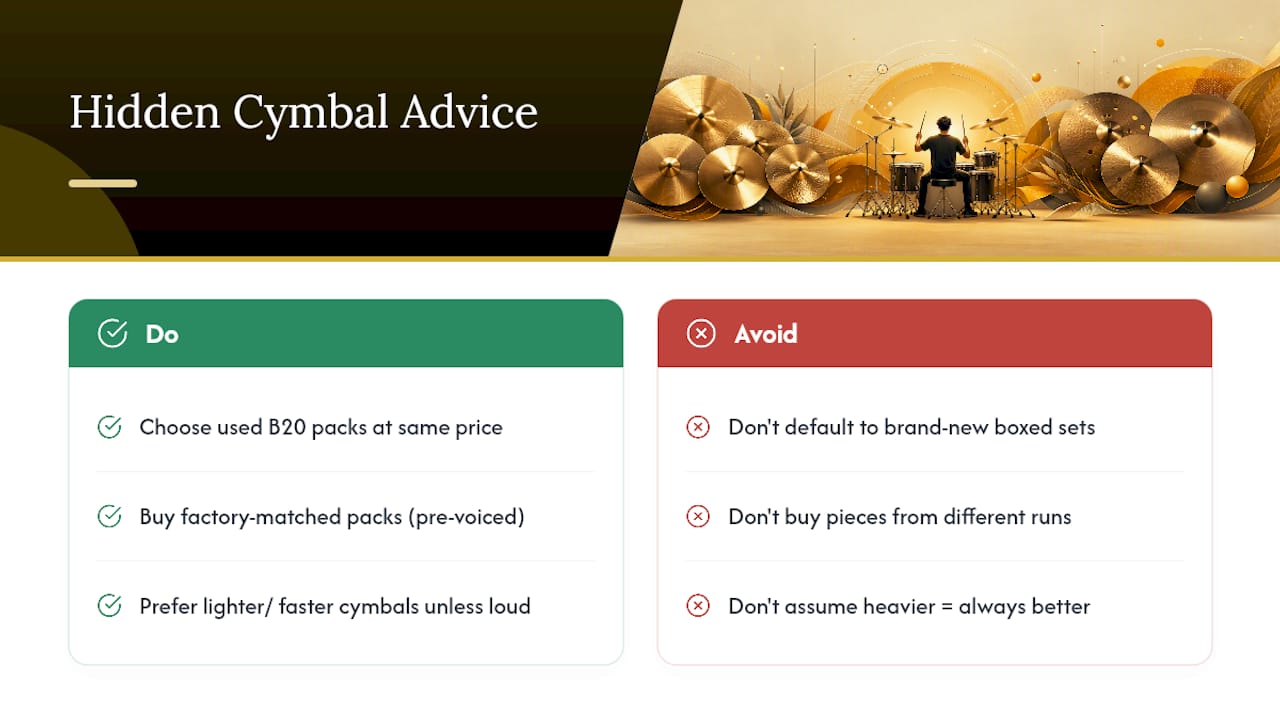
Most buying guides treat “new vs. used” as a beginner-only question and push everyone toward a fresh box. That’s backward. The smartest move for an intermediate or advancing player is often a used B20 pack over a new B8 or brass set at the same price, because bronze holds its value and its tone improves with age instead of degrading.
The other thing conventional advice underrates: factory matching isn’t a marketing gimmick, it’s a genuine shortcut. Buying cymbals piece by piece from different runs means you’re doing the manufacturer’s voicing work yourself, by trial and error, on your own kit. A matched pack skips that entirely.
Where I’d push back hardest on typical advice is the assumption that a bigger, heavier cymbal is always a better cymbal. It’s only better if you’re playing loud, live rooms. For a lot of readers, a lighter, faster-responding setup will actually serve the music better.
Get Expert Help Choosing Your Next Cymbal Pack
Reading a checklist only gets you so far when you’re staring at a listing trying to decide between three similar-looking packs. Temple of Sound carries curated cymbal packs built around Alchemist Cymbals’ factory-matched sets, so the tonal blending work described above is already done before the box ships.
Members get loyalty rewards and ongoing discounts on future purchases, drumsticks included, and every pack comes with clear warranty terms so a crack or defect doesn’t leave you stuck. If you’re not sure which alloy or size range fits your genre, reach out to the team directly. They can talk you through the differences between a B12 mid-tier pack and a full B20 professional set based on what you actually play. Start by browsing the current cymbal pack lineup and comparing weights and included sizes against the checklist above.
Frequently Asked Questions
What’s the difference between B20 and B8 cymbals? B8 bronze is brighter, simpler harmonically, and typically found in mid-range packs at a lower price.
Is it better to buy a cymbal pack or individual cymbals? A pack makes sense when you’re building a first kit, since factory matching guarantees the pieces blend tonally and usually costs less than buying separately. Individual purchases work better once you already own solid pieces and just need to fill one gap.
Can I use a low-volume cymbal pack for regular gigs? Low-volume cymbals preserve stick feel but cut real projection, so they work well for apartment practice but generally fall short on a live stage where volume and cut matter.
How do I know if a used cymbal is worth buying? Check for hairline cracks near the bell and edge, look for key-holing around the mounting hole, and play it to confirm the sustain isn’t choked or dead.
Copy this response
Sources
- Nick Petrella percussion guidance (response testing)
- Buying used vs new cymbals — Cymbal Archive
- What to listen for when selecting cymbals — Percussion Source
- 10 Best Cymbal Packs (August 2026) — Rosenberry Rooms