10 August 2026
5A vs 5B Drumsticks: Which Should You Play?
5A vs 5B Drumsticks: Which Should You Play?
Pick 5A for versatility and 5B for power. That’s the short answer, and for most players it holds up across every genre and kit setup. The size difference between 5A and 5B is small on paper but meaningful in your hands.
- Multi-genre players, session drummers, and beginners: 5A. It’s the industry benchmark for balance, and it works across pop, funk, jazz, worship, and lighter rock without forcing you to fight the stick.
- Rock, hard rock, and punk players, or anyone with larger hands: 5B. The added mass gives you more projection and a fuller grip, especially when you’re competing with loud guitars.
- Players who want more speed or play at low volume: Try 7A. If you need maximum power for very heavy music or practice pads, 2B is worth a session.
Not sure which camp you’re in? A five-minute A/B play test at the kit will tell you more than any spec sheet.
Key Takeaways
Choose 5A for versatility across genres and 5B for power and projection in louder settings — and run a five-minute A/B play test at the kit to confirm which fits your hands and style.
| Point | Details |
|---|---|
| 5A is the all-round default | ~16 in length, ~0.565 in diameter; balanced rebound suits multi-genre and session playing. |
| 5B adds mass for power | ~0.595–0.605 in diameter; more projection and durability for rock, hard rock, and larger hands. |
| Diameter drives the key trade-offs | More mass means louder output and slower rebound; less mass means more speed and finesse. |
| A/B play test beats spec-reading | Five minutes at the kit — rebound, volume, and fatigue checks — reveals fit faster than any number. |
| Templeofsound custom sticks | Handcrafted options let you specify diameter, tip shape, and wood type for a precise fit. |
Table of Contents
- What are 5A drumsticks, and why do so many players use them?
- What are 5B drumsticks, and who actually benefits from them?
- Side-by-side comparison: specs and what they mean for your playing
- How diameter, length, tip shape, and material shape your sound
- How to choose between 5A and 5B at the kit
- When neither 5A nor 5B is right: alternatives worth trying
- Common myths about drumstick sizing, debunked
- What experienced players actually recommend
- Handcrafted and custom sticks from Templeofsound
- Sources
What are 5A drumsticks, and why do so many players use them?
The 5A is the closest thing drumming has to a universal standard. Typical dimensions run around 16 inches in length with a diameter near 0.565 inches, though manufacturers follow sizing conventions rather than a single locked spec, so you’ll find slight variation across brands. That diameter sits in the middle of the common range, which is exactly why the 5A feels balanced in most hands.
What players mean when they call it an “all-rounder” is that it doesn’t push you in any direction. The rebound is quick without being twitchy. The weight is light enough for ghost notes and brush-style finesse but substantial enough to drive a snare crack. Session drummers reach for 5A because it adapts: one song calls for a soft jazz ride pattern, the next needs a punchy backbeat, and the stick handles both without a grip adjustment.
Common genres where 5A earns its keep: pop, funk, R&B, jazz, worship, studio recording, and lighter rock. It’s also the default recommendation for beginners because the balanced feel lets you develop technique without compensating for a stick that’s too heavy or too thin.
Pro Tip: If you’re playing 5A and finding yourself gripping tighter as the set goes on, or breaking sticks more than once a month, that’s your hands telling you the stick is too light for your playing style. Try a 5B for a week before assuming your technique needs fixing.
What are 5B drumsticks, and who actually benefits from them?
The 5B shares the same approximate length as the 5A (around 16 inches) but runs noticeably thicker, with a diameter commonly between 0.595 and 0.605 inches. That extra diameter adds mass, and mass changes everything about how the stick behaves.
The feel is weight-forward. Strokes carry more momentum, which means you get more volume from the same effort on toms and snare. The trade-off is rebound: a 5B returns a fraction slower than a 5A, which matters for fast rudiment work but is barely noticeable for most rock playing. Cymbal wash tends to be fuller and louder, which cuts through a loud stage mix without you having to swing harder.
Who benefits most:
- Drummers playing rock, hard rock, punk, or heavier pop contexts where the band is loud
- Players with larger hands who find 5A feels thin or slippery in the grip
- Anyone who breaks 5A sticks frequently and wants better durability without jumping to a 2B
Pro Tip: A thicker stick doesn’t just survive longer — it can actually reduce the effort needed to hit at volume. If you’ve been muscling through loud gigs with a 5A, one rehearsal with a 5B often reveals how much unnecessary tension you were carrying.
Side-by-side comparison: specs and what they mean for your playing
The numbers below reflect common manufacturer ranges rather than a single universal spec. Real-world sticks vary slightly by brand and wood type.
| Feature | 5A | 5B |
|---|---|---|
| Typical diameter | about 0.565 inches | about 0.595 to 0.605 inches |
| Typical length | around 16 inches | around 16 inches |
| Perceived weight | Medium | Medium-heavy |
| Balance and rebound | Fast, neutral balance | Slightly weight-forward, slower return |
| Best-for genres | Pop, funk, jazz, session, worship | Rock, hard rock, punk, heavy pop |
| Durability | Good | Better — thicker cross-section resists breakage |
| Typical price range | Comparable across sizes | Comparable across sizes |
Incremental diameter increases across 7A, 5A, and 5B translate to measurable differences in mass, which affect volume potential, rebound, and perceived fatigue over a long set.
Practical performance differences worth knowing:
- Cymbal articulation: 5A produces a cleaner, more defined ping on a ride; 5B generates a fuller, louder wash
- Ghost notes: 5A’s lighter weight makes quiet snare patterns easier to control
- Volume ceiling: 5B reaches louder peaks with less physical effort
- Fatigue rate: 5A is generally easier on wrists and forearms over a long set; 5B can tire players faster if technique isn’t efficient
How diameter, length, tip shape, and material shape your sound
Mass and taper are the two physical levers that determine how a stick feels and what it does to your drums and cymbals. A thicker stick carries more momentum through each stroke, which transfers more energy to the drum head. That’s why 5B hits louder at the same velocity — not because of any magic, just physics.
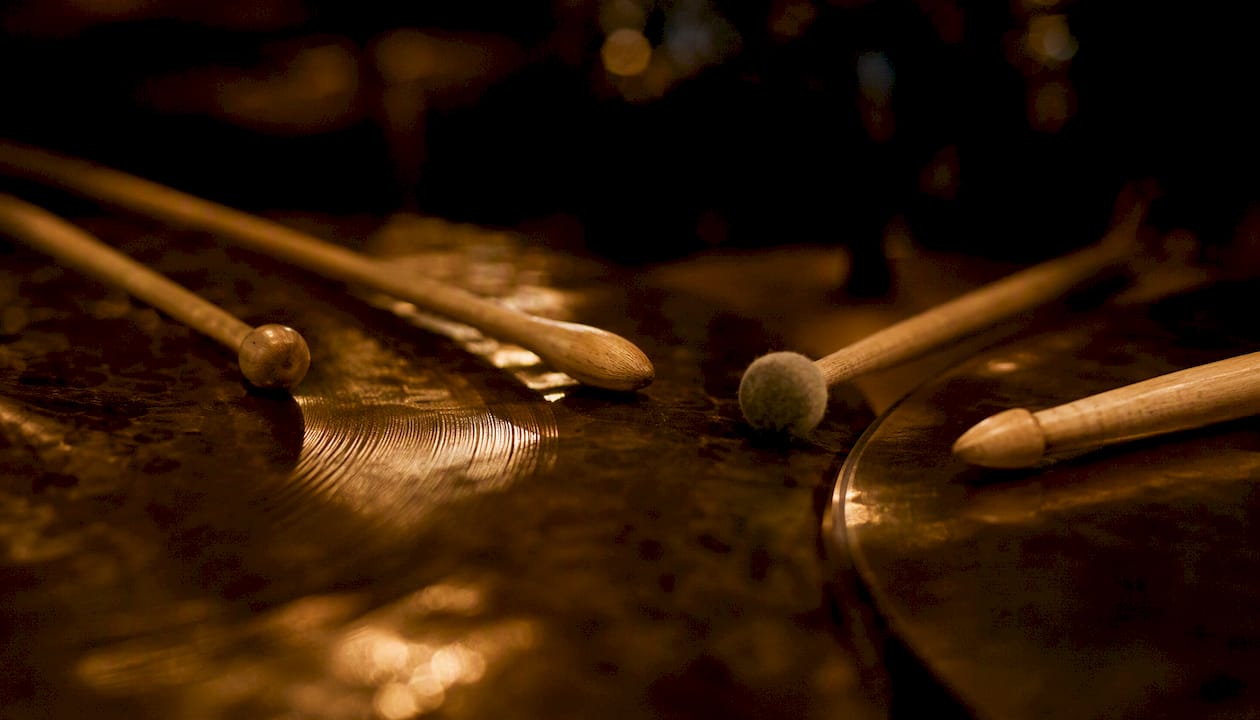
Taper (the gradual narrowing from shoulder to tip) affects rebound speed. A longer, more gradual taper creates a whippier feel with faster return. A shorter, thicker taper gives you a heavier, more deliberate stroke. Most 5A sticks use a slightly longer taper than 5B, which contributes to that quick, neutral rebound players associate with the size.
Tip shape changes the contact patch on your cymbal. A round tip produces a focused, bright ping. An oval tip spreads the contact slightly for a warmer, fuller sound. A teardrop or acorn tip sits between the two, giving you a blend of definition and body. Neither 5A nor 5B is locked to a single tip shape — you’ll find all three across both sizes — so tip choice is a separate decision from diameter.
Wood vs. nylon tips shift articulation. Nylon produces a brighter, more consistent attack and holds up longer on cymbals. Wood gives a warmer, slightly softer sound that many players prefer on ride cymbals for jazz or studio work.
Pro Tip: If you’re switching from 5A to 5B for the first time, keep the same tip shape so you’re only changing one variable. Swapping diameter and tip shape at once makes it hard to know which change is affecting your sound.
How to choose between 5A and 5B at the kit
A quick A/B play test at the kit is the fastest path to the right choice. Run through these steps with both sizes back to back:
- Hold test. Pick up each stick and close your eyes. Does the grip feel natural without squeezing? A stick that feels too thin will make you grip tighter unconsciously.
- Rebound drill. Play single strokes on a practice pad or snare at medium tempo. Notice how quickly the stick returns. 5A should feel snappier; 5B slightly more deliberate.
- Volume test. Play a loud backbeat on the snare with each stick using the same stroke. Which one gets louder with less effort?
- Cymbal articulation test. Play a ride pattern and listen for the ping. 5A will give you more definition; 5B more body and wash.
- Endurance run. Play a two-minute groove at your normal intensity. Check your forearms and wrists. Tension or fatigue signals a mismatch.
Checklist for fit:
- Hand size: if your fingers don’t wrap comfortably around a 5A, try 5B
- Sound goal: need cut and finesse? 5A. Need projection and power? 5B
- Context: recording sessions favor 5A’s control; loud stage gigs often favor 5B’s output
Red flags that the stick is wrong for you:
- You’re gripping so tight your knuckles whiten
- You lose control on fast passages
- You break sticks more than once every few weeks
- Your wrists ache after a normal set
When neither 5A nor 5B is right: alternatives worth trying
Sometimes the 5A/5B choice isn’t the right frame. A few other sizes solve specific problems better.
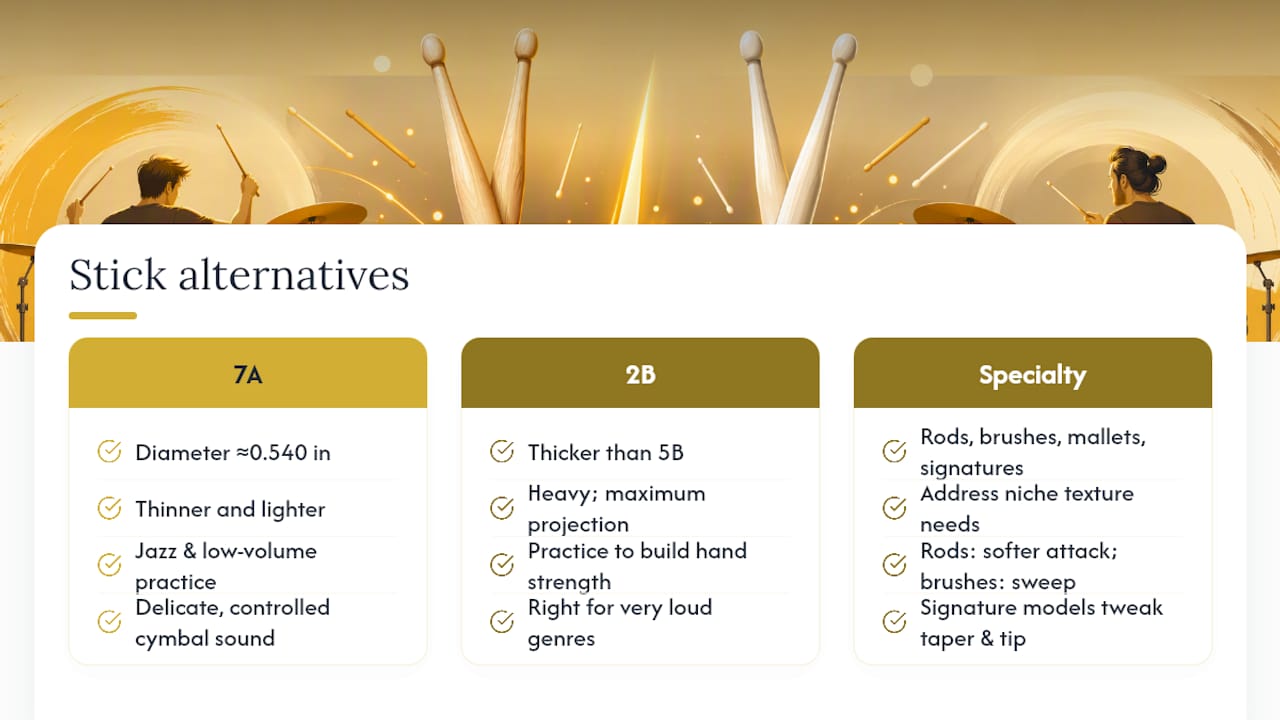
7A runs thinner (around 0.540 inches in diameter) and lighter than 5A. It’s the go-to for jazz drummers, low-volume practice, and players who prioritize speed over power. The 7A vs 5A difference is most obvious on cymbals, where 7A produces a delicate, controlled sound that 5A can’t quite match at low dynamics.
2B is the heavy end of the common range, thicker than 5B and built for maximum projection. Some drummers use 2B exclusively for practice to build hand strength, then switch to 5A or 5B for performance. It’s also the right call for very loud, high-energy genres where a 5B still feels light.
Specialty sticks (rods, brushes, mallets, signature models) address niche needs that diameter alone can’t fix. Rods give you a softer attack with more spread; brushes are essential for jazz and acoustic settings. Signature models from major manufacturers often tweak taper and tip shape around a specific player’s style, which can be worth exploring once you know your baseline size.
The rule of thumb: if you’re experiencing hand fatigue, try going lighter. If you want more projection or keep breaking sticks, go heavier. If you need a completely different texture, specialty sticks are the answer.
Common myths about drumstick sizing, debunked
Myth: Thicker always means louder. Tip shape and stroke technique matter just as much as diameter. A 5A with a round tip and a full arm stroke can hit louder than a 5B played with wrist-only technique.
Myth: Expensive sticks are better sticks. Wood quality, grain consistency, and fit matter more than price. A well-matched mid-range stick in the right size will outperform a premium stick in the wrong diameter every time.
Myth: Beginners should always start with 5A. 5A is a great default, but a player with large hands may develop better technique faster on a 5B because the grip feels natural from day one. Larger hands often prefer thicker sticks for comfort and control.
Myth: You should stick to one size forever. Many working drummers keep both 5A and 5B in their bag and switch based on the gig. Studio session? 5A. Loud rock show? 5B. That’s not indecision — that’s smart gear management.
Pro Tip: When comparing sizes, try the same wood type (hickory vs. hickory, maple vs. maple) across both diameters. Hickory is denser and more durable; maple is lighter and more responsive. Mixing wood types while comparing sizes adds a variable that clouds the test.
What experienced players actually recommend
The conventional wisdom says pick 5A and figure out the rest later. That’s not wrong, but it’s incomplete. After working with drummers across skill levels, the more useful starting point is this: let your hands and your music tell you what they need, not a default recommendation.
Most players who try 5A first and find it unsatisfying aren’t doing anything wrong. They’re often players with larger hands, heavier technique, or a natural tendency to play with full arm strokes rather than wrist-dominant technique. For them, 5B isn’t a step up — it’s just the right fit.
The spec numbers matter less than people think. A 0.03-inch diameter difference sounds trivial until you hold both sticks back to back. Then it’s obvious. The weight distribution, the grip feel, the way the stick responds off a snare head — those are things you feel, not calculate.
Personal testing remains the final arbiter. No article, including this one, can replace five minutes at a kit with both sizes in your hands.
Handcrafted and custom sticks from Templeofsound
Knowing your size is one thing. Finding a stick built to that spec with quality wood and consistent grain is another.

Templeofsound offers handcrafted drumsticks and a custom stick builder through the London Drumstick Co., giving you the ability to dial in diameter, length, tip shape, and wood type rather than settling for whatever’s on the shelf. Whether you’ve confirmed you’re a 5A player or you’re ready to try a 5B with a specific taper, the range covers both sizes and the territory between them. Visit Templeofsound to browse the collection or configure a custom pair built to your spec.
Sources
- 5A vs 5B Drumsticks: Which One Is Right for You? - CCDrums
- 5A Vs 5B Vs 2B Drumsticks: Which Size Is Right For Your Playing Style? - London Drumstick Co.
- 7A vs 5A vs 5B Drum Sticks – What’s the Ideal Size for You? - Drumstrive
- Choosing Drumsticks: what the numbers & letters mean - Sono Music